
Understanding the Massachusetts Energy Code

Understanding the Massachusetts Energy Code: What Homeowners and Contractors Need to Know

Summary

Massachusetts has some of the strictest energy efficiency regulations in the country. For both homeowners and contractors, understanding the Massachusetts Energy Code is essential when planning insulation and building projects.

Here’s what you need to know.

What Is the Massachusetts Energy Code?

The Massachusetts Building Energy Code (780 CMR 9th Edition) sets requirements for insulation, air sealing, and overall energy performance in buildings. Its goal is to reduce energy consumption, lower costs, and promote sustainability.

Why It Matters for Homeowners and Contractors

  • Ensures your home is energy-efficient and comfortable.
  • Helps contractors avoid costly mistakes or project delays.
  • Increases property value by meeting green building standards.

Insulation Requirements in Massachusetts

R-value Standards:
The R-value measures insulation’s resistance to heat flow. Massachusetts requires specific R-values depending on building zone and area of the house:

  • Attic: R-49 or higher
  • Walls: R-20 or higher
  • Basements/Crawl Spaces: R-10 or higher

Spray Foam and Code Compliance:
Closed-cell spray foam often exceeds minimum R-value requirements with fewer inches of material — making it a top choice for contractors.

Common Mistakes in Meeting Code

  • Using outdated insulation methods.
  • Ignoring air leakage control.
  • Failing to insulate basements or crawl spaces.

How Thermalcore Helps You Stay Compliant

At Thermalcore Insulation, we:

  • Use insulation materials that meet or exceed Massachusetts energy standards.
  • Offer expert guidance for contractors and homeowners.
  • Ensure every project passes inspection and avoids compliance issues.

Stay compliant and energy-efficient with Thermal Core Insulation. Contact us today for a free consultation and ensure your project meets Massachusetts Energy Code requirements.
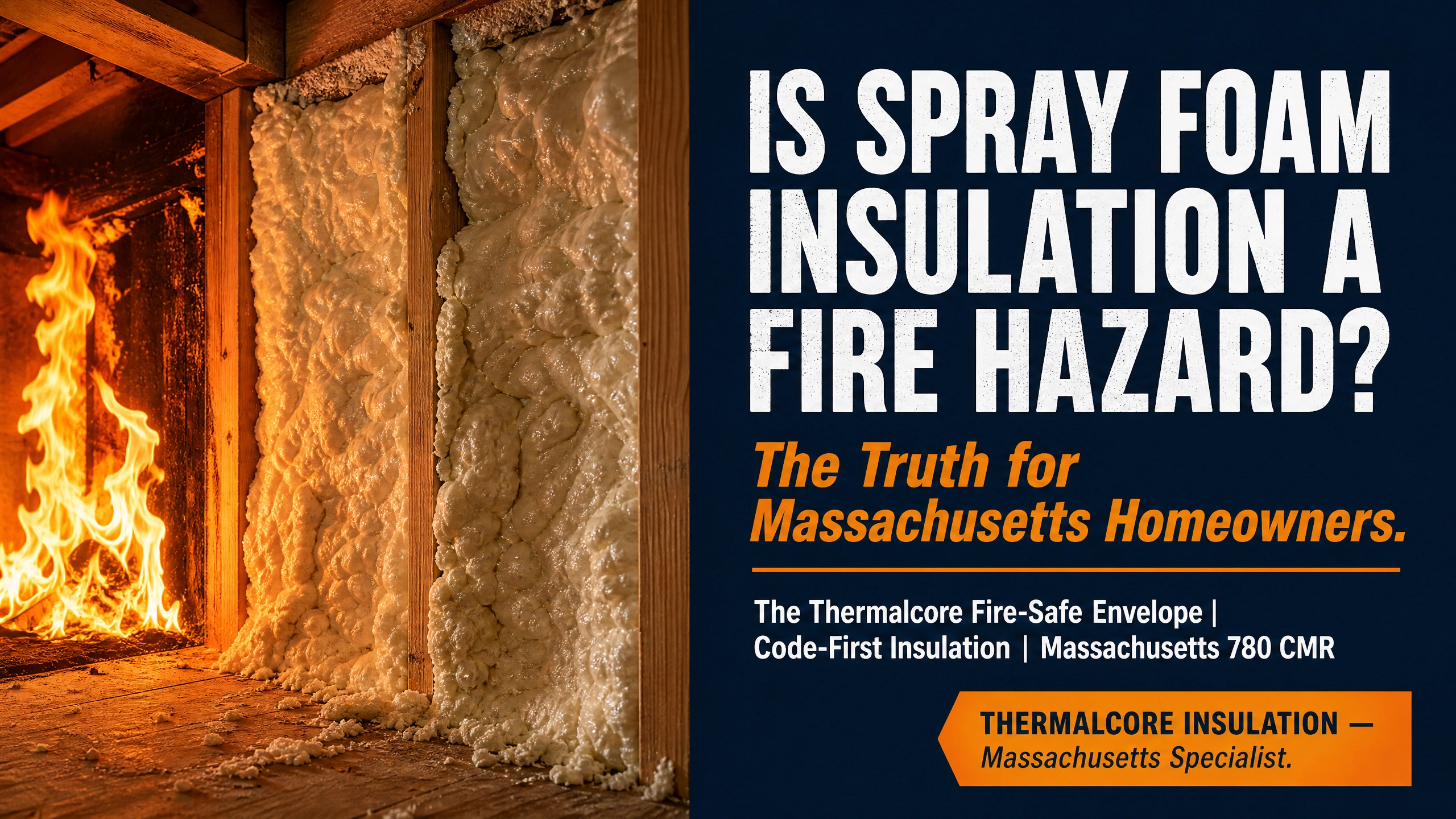
Thermal Core Insulation cover infographic explaining whether spray foam insulation is a fire hazard, covering Massachusetts building code requirements, thermal barriers, and fire-safe installation practices.

Is Spray Foam Insulation a Fire Hazard?

If you are researching insulation upgrades for your Massachusetts home, you have likely encountered the question: is spray foam insulation a fire hazard? It is a valid concern. Between news reports of insurance companies flagging homes and the technical jargon thrown around by contractors, the topic of fire safety can feel overwhelming.

The short answer is that spray foam, like the wood framing holding up your house, is a combustible material. If exposed directly to a continuous flame, it will burn. However, when installed correctly according to the Massachusetts building code, it is entirely safe.

Read More
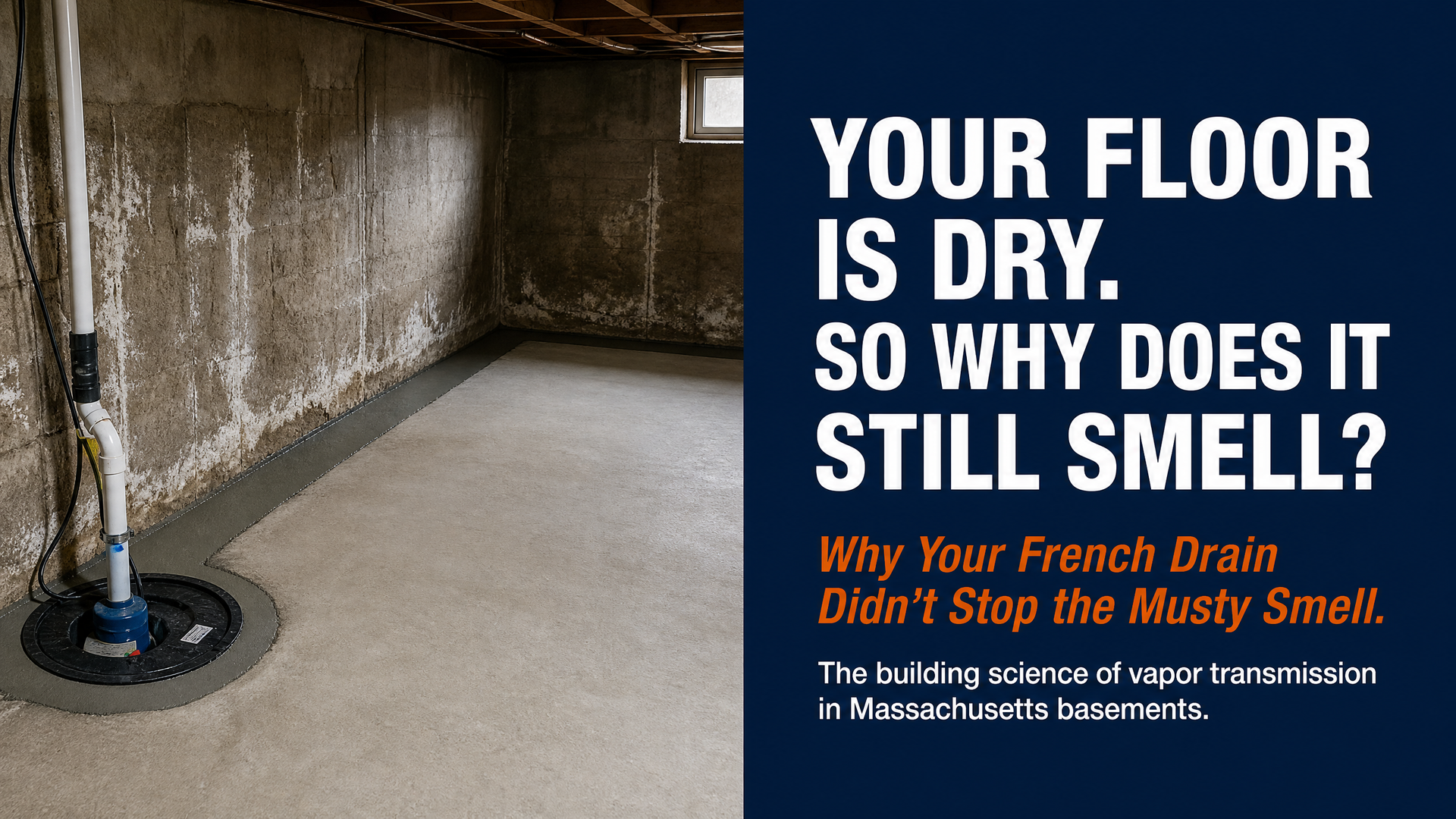
Thermal Core Insulation cover image showing a dry basement with a French drain and sump pump, explaining why musty odors remain after waterproofing due to vapor transmission through concrete walls.

Why Your French Drain Didn’t Stop the Musty Smell

If you are wondering why does my basement still smell musty after a french drain, you are not alone. Thousands of Massachusetts homeowners write large checks to waterproofing companies every year, only to walk downstairs a few months later and hit that familiar wall of damp, earthy air. In fact, basement waterproofing costs in Massachusetts can easily exceed $10,000, making it incredibly frustrating when the smell remains.

You look at the floor. It is completely dry. The sump pump is quiet. The perimeter drain is doing exactly what the contractor promised it would do, keeping liquid water out of your basement.

Read More
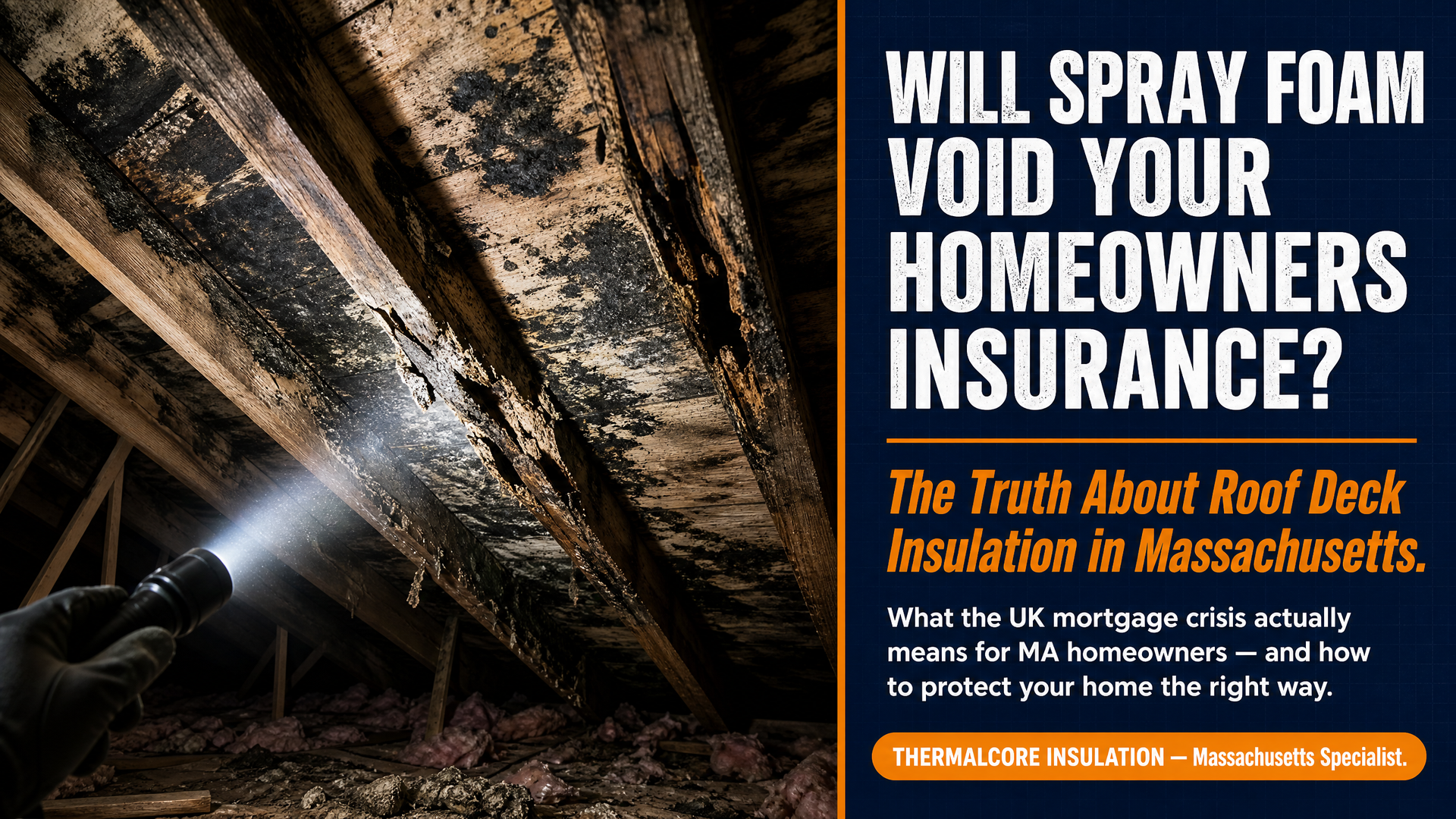
Thermal Core Insulation cover image featuring a damaged roof deck with wood rot, explaining the truth about spray foam insulation, homeowners insurance, and roof deck insulation in Massachusetts.

Will Spray Foam Void My Homeowners Insurance in Massachusetts?

If you have been researching insulation upgrades for your Massachusetts home, you have likely stumbled across the horror stories.

A quick search on Reddit or YouTube reveals terrifying warnings: homeowners peeling back their siding to find the wood framing turned to dust. News reports from the United Kingdom claim that major mortgage lenders are refusing to finance homes with spray foam in the attic. Forums filled with anxiety about voided homeowners’ insurance policies and structural rot.

As a homeowner, it is enough to make you cancel your insulation estimate immediately.

Read More