
Understanding the Massachusetts Energy Code

Understanding the Massachusetts Energy Code: What Homeowners and Contractors Need to Know

Summary

Massachusetts has some of the strictest energy efficiency regulations in the country. For both homeowners and contractors, understanding the Massachusetts Energy Code is essential when planning insulation and building projects.

Here’s what you need to know.

What Is the Massachusetts Energy Code?

The Massachusetts Building Energy Code (780 CMR 9th Edition) sets requirements for insulation, air sealing, and overall energy performance in buildings. Its goal is to reduce energy consumption, lower costs, and promote sustainability.

Why It Matters for Homeowners and Contractors

  • Ensures your home is energy-efficient and comfortable.
  • Helps contractors avoid costly mistakes or project delays.
  • Increases property value by meeting green building standards.

Insulation Requirements in Massachusetts

R-value Standards:
The R-value measures insulation’s resistance to heat flow. Massachusetts requires specific R-values depending on building zone and area of the house:

  • Attic: R-49 or higher
  • Walls: R-20 or higher
  • Basements/Crawl Spaces: R-10 or higher

Spray Foam and Code Compliance:
Closed-cell spray foam often exceeds minimum R-value requirements with fewer inches of material — making it a top choice for contractors.

Common Mistakes in Meeting Code

  • Using outdated insulation methods.
  • Ignoring air leakage control.
  • Failing to insulate basements or crawl spaces.

How Thermalcore Helps You Stay Compliant

At Thermalcore Insulation, we:

  • Use insulation materials that meet or exceed Massachusetts energy standards.
  • Offer expert guidance for contractors and homeowners.
  • Ensure every project passes inspection and avoids compliance issues.

Stay compliant and energy-efficient with Thermal Core Insulation. Contact us today for a free consultation and ensure your project meets Massachusetts Energy Code requirements.
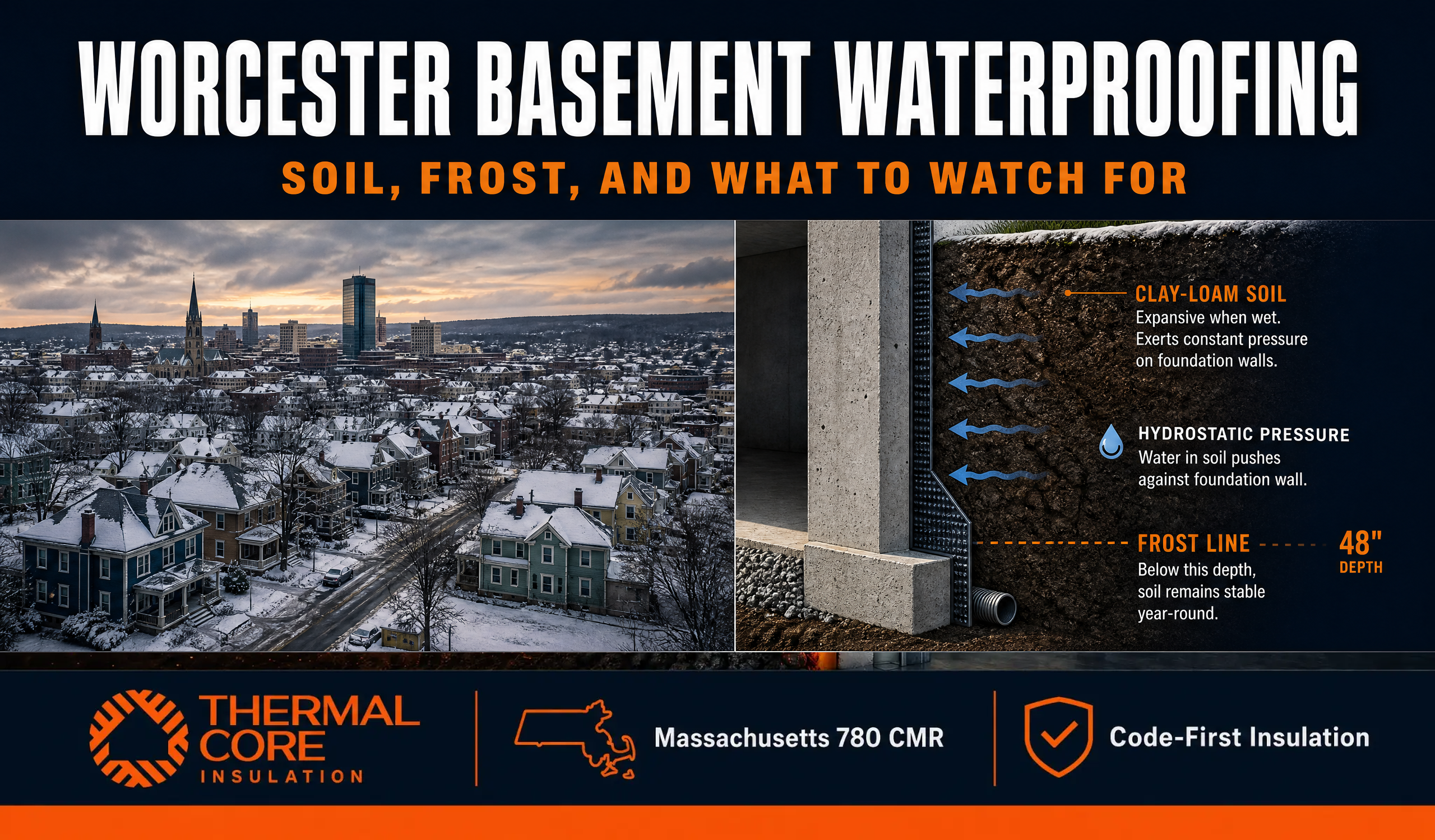
Infographic about basement waterproofing in Worcester, Massachusetts, explaining local clay-loam soil, hydrostatic pressure, the 48-inch frost line, and how these conditions affect residential foundations.

Worcester Basement Waterproofing: Soil, Frost, and What to Watch for

Worcester basement waterproofing is not the same as waterproofing a home on the coast or in the sandy soils of Cape Cod. Central Massachusetts presents a unique combination of geological and climatic challenges that put immense stress on residential foundations.

If you own a home in Worcester, you are dealing with dense clay-loam soils, a deep 48-inch frost line, and harsh New England freeze-thaw cycles. These factors combine to create significant hydrostatic pressure and frost heave risks that can compromise your foundation and ruin a finished basement if not addressed correctly.

Read More
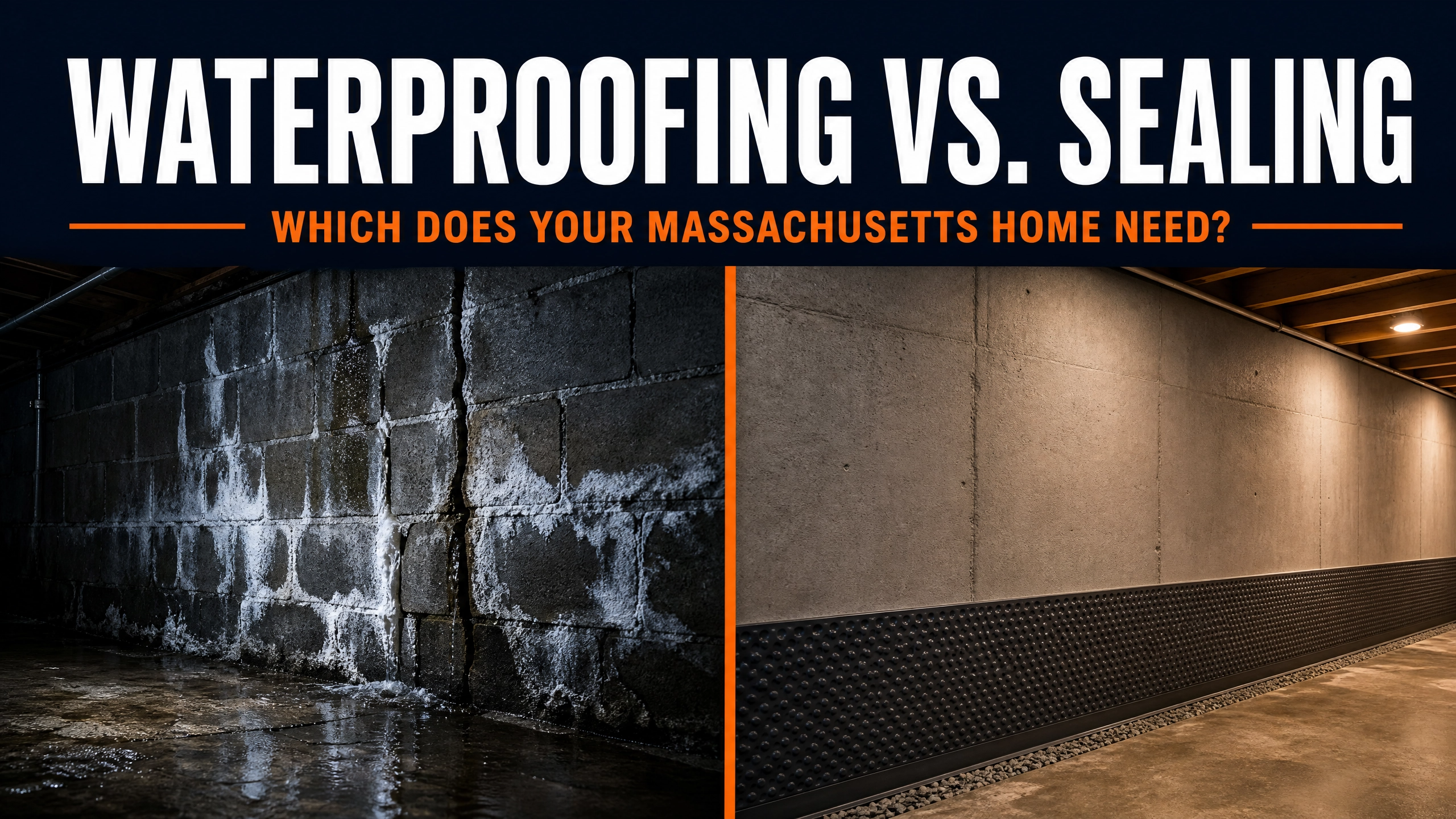
ThermalCore Insulation infographic comparing basement waterproofing and concrete sealing for Massachusetts homes, showing a wet foundation wall versus a professionally waterproofed basement to explain which solution prevents water intrusion.

Waterproofing vs. Sealing Basement: What’s the Difference and Which Does Your MA Home Need?

Sealing (or damp-proofing ) involves applying a thin, paint-like coating to concrete to block surface moisture and humidity. Waterproofing is a comprehensive system designed to withstand hydrostatic pressure from groundwater, utilizing thick membranes, dimple boards, and perimeter drainage to physically stop or redirect water intrusion.

Waterproofing vs sealing basement walls is a debate that costs Massachusetts homeowners thousands of dollars every spring. When the snow thaws and spring rains arrive, a damp basement is a common sight. The immediate instinct is to head to the hardware store, buy a bucket of concrete sealer or waterproof paint, and roll it onto the walls.

Read More
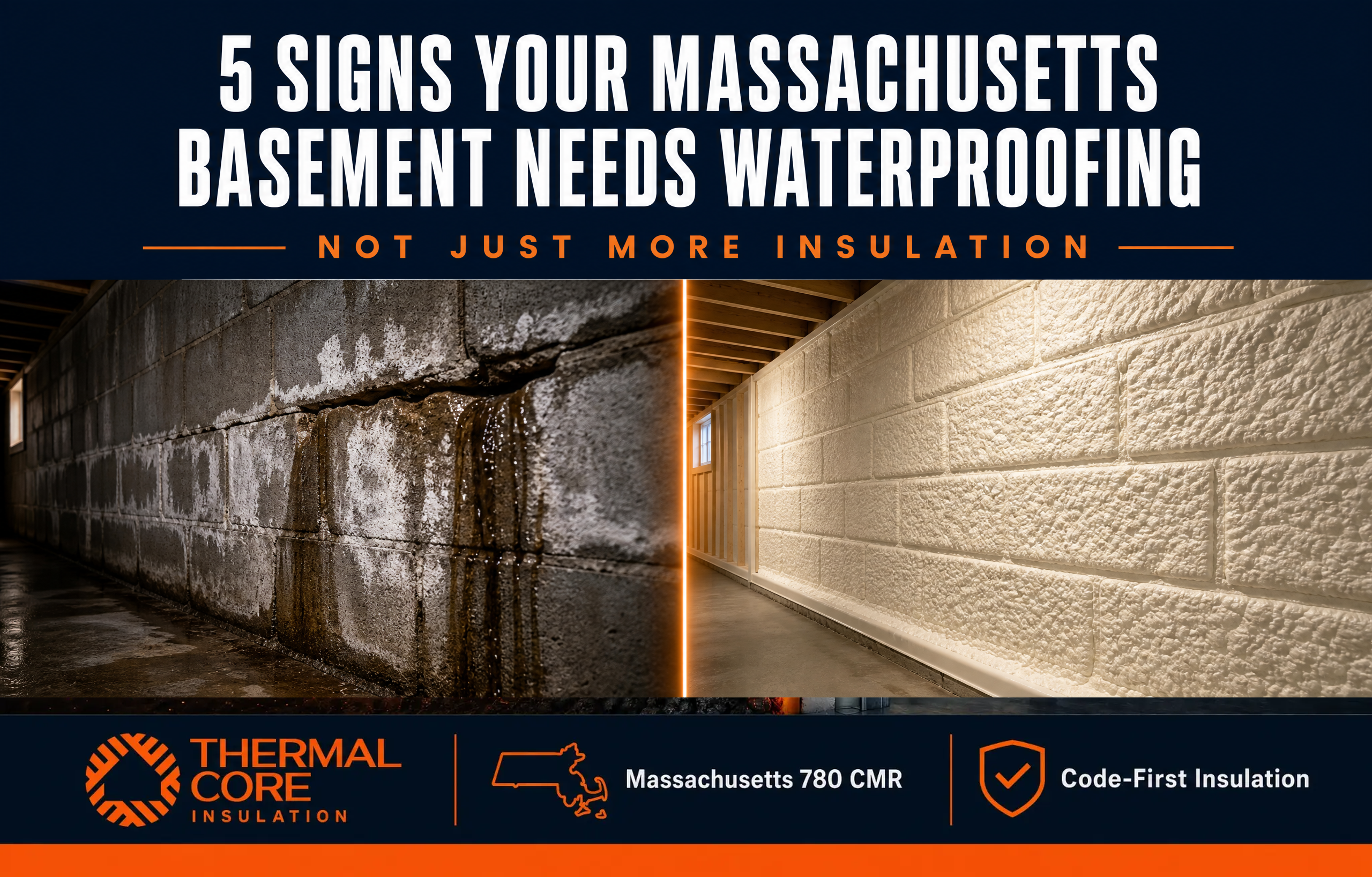
ThermalCore Insulation infographic highlighting fire-rated spray foam insulation solutions for Boston's historic homes and triple-decker buildings. The graphic focuses on Massachusetts 780 CMR compliance, fire-safe insulation systems, and code-first solutions that preserve older buildings while improving energy efficiency.

5 Signs Your Massachusetts Basement Needs Waterproofing (Not Just More Insulation)

Massachusetts basement waterproofing signs are often misdiagnosed by homeowners as simple insulation problems, a costly mistake that traps moisture, accelerates foundation decay, and creates hidden mold farms behind newly finished walls.

When a basement feels damp, cold, or smells musty, the instinct is to seal it up with thick layers of insulation. But insulation fixes energy problems, not water problems. Applying closed-cell spray foam or rigid foam board over a foundation that is actively leaking groundwater is like putting a bandage over a running faucet. The water will still enter, but now it will be trapped between the concrete and the insulation, silently degrading your home’s structural integrity.

Read More