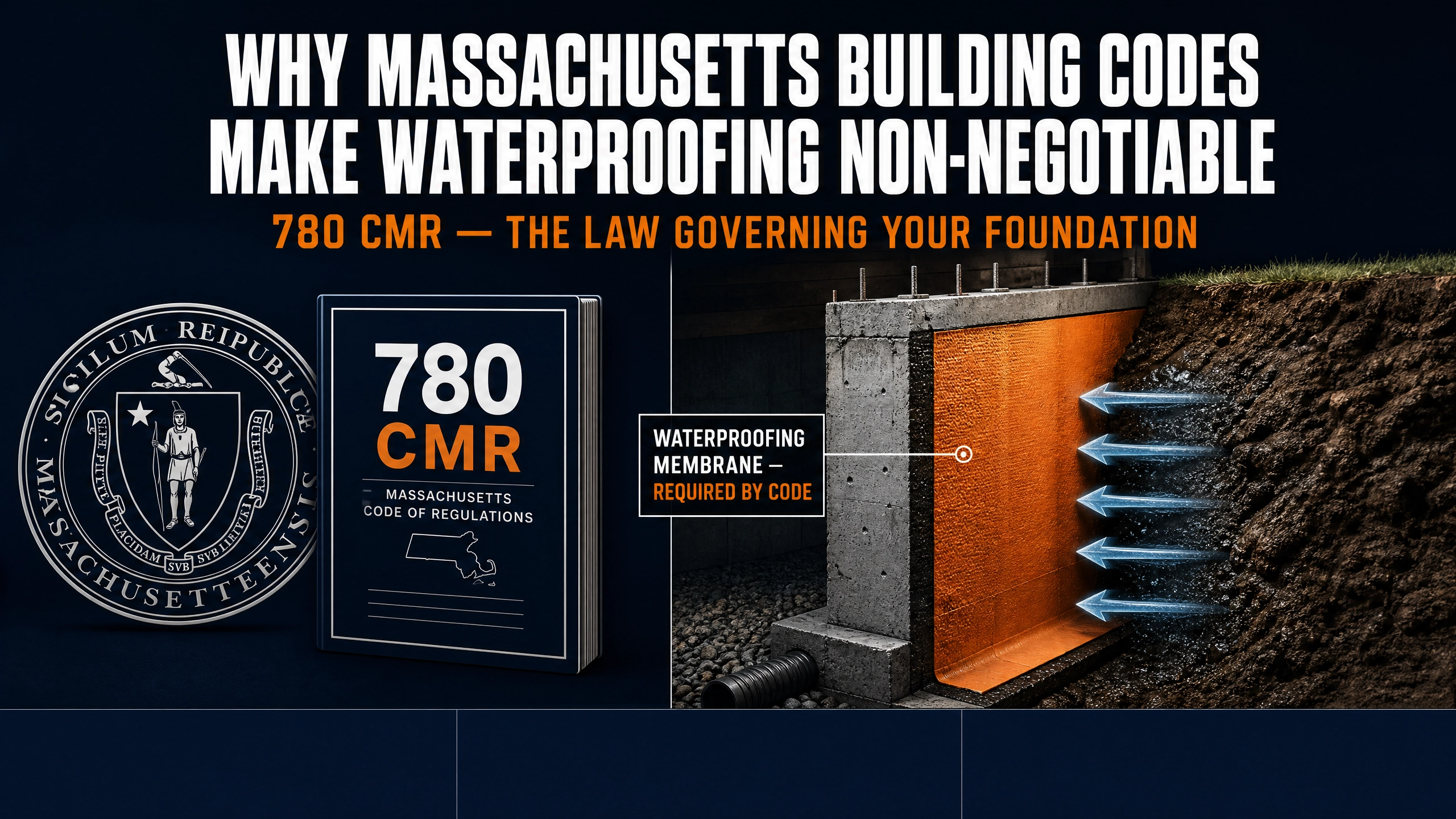
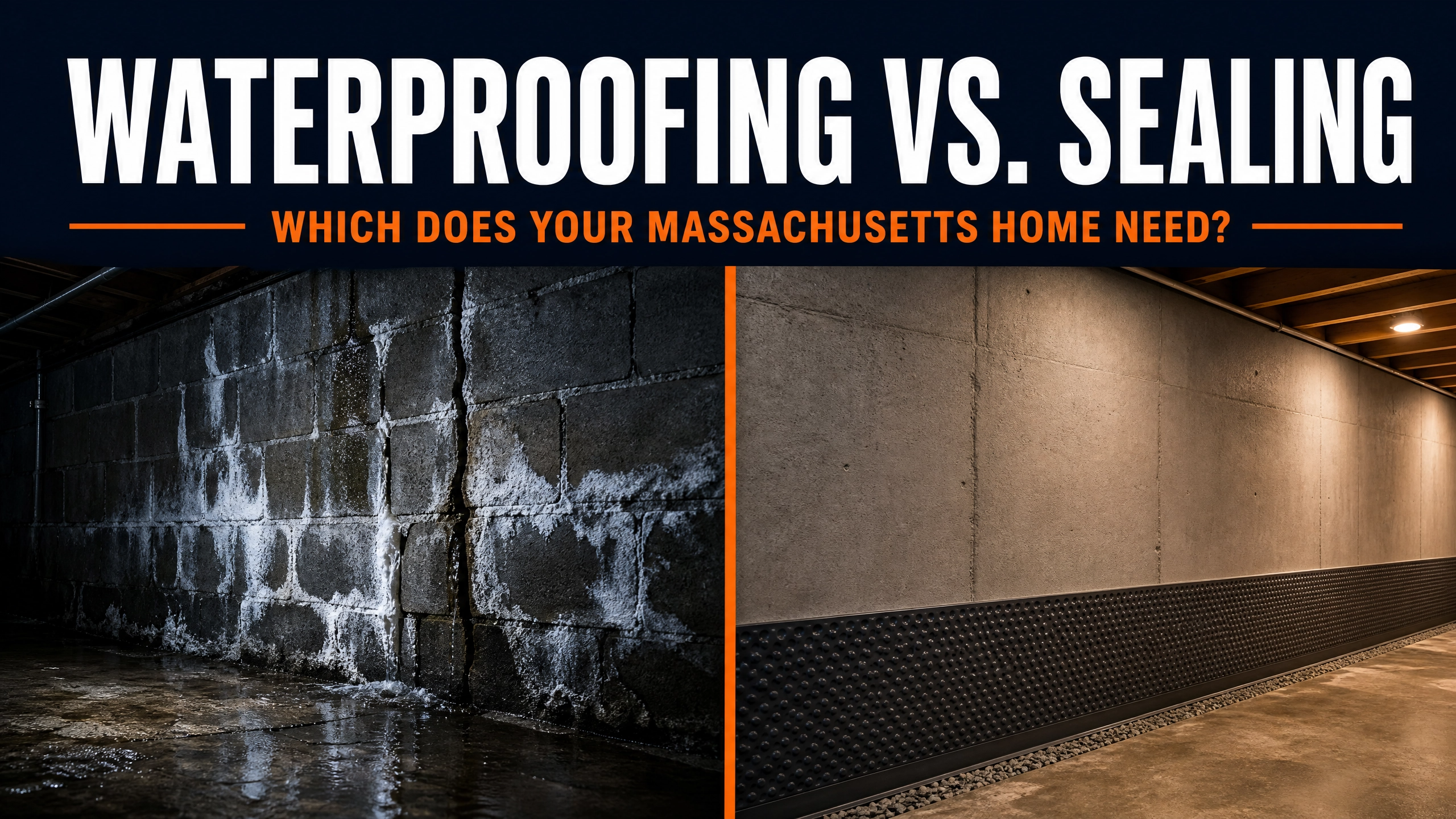
Sealing (or damp-proofing ) involves applying a thin, paint-like coating to concrete to block surface moisture and humidity. Waterproofing is a comprehensive system designed to withstand hydrostatic pressure from groundwater, utilizing thick membranes, dimple boards, and perimeter drainage to physically stop or redirect water intrusion.
Waterproofing vs sealing basement walls is a debate that costs Massachusetts homeowners thousands of dollars every spring. When the snow thaws and spring rains arrive, a damp basement is a common sight. The immediate instinct is to head to the hardware store, buy a bucket of concrete sealer or waterproof paint, and roll it onto the walls.
While this might temporarily hide a moisture stain, it fundamentally misunderstands the physics of why basements flood. There is a massive difference between stopping surface humidity and fighting back thousands of pounds of groundwater pressure.
In this guide, we will break down the exact technical differences between sealing (damp-proofing) and true waterproofing, explain why hydrostatic pressure always wins against paint, and help you determine which solution your Massachusetts home actually requires before you invest in finishing your basement.
Moisture vs. Pressure
To understand the difference between the two approaches, you must first understand the difference between the forces they are fighting.
What is Concrete Sealing (Damp-Proofing)?
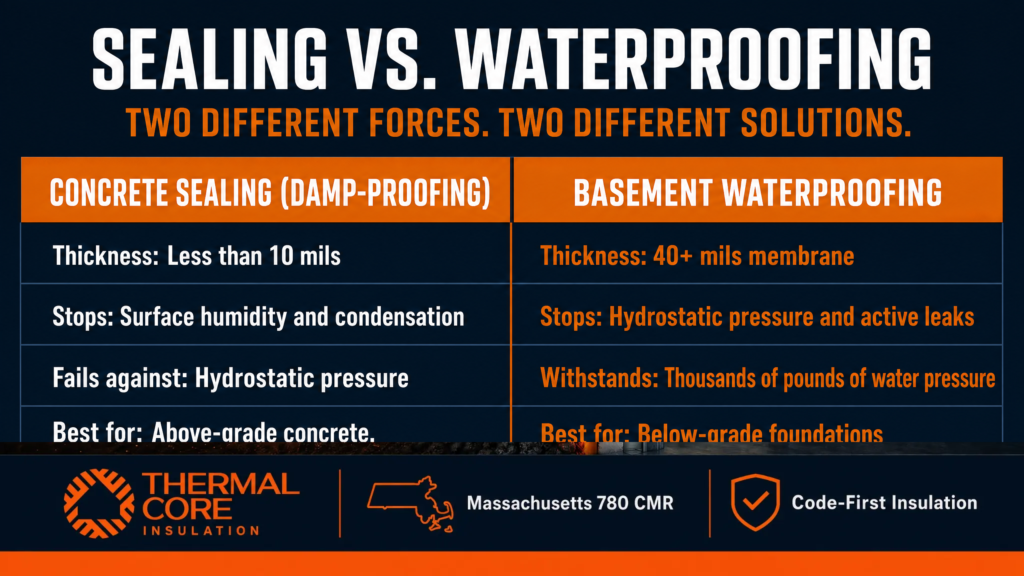
Concrete sealing, often referred to in the building code as damp-proofing, is the process of applying a thin, liquid coating to a concrete surface. These products, which include acrylics, polyurethanes, epoxies, and silane/siloxane blends, are designed to block the microscopic capillaries in the concrete.
A sealer is highly effective at stopping surface moisture. If you spill oil on a sealed garage floor, or if rain hits a sealed patio, the water beads up and rolls off. In a basement environment, sealers can help reduce general humidity wicking through the walls from damp soil.
However, as industry experts note, a sealer cures to a very thin layer, often less than 10 mils thick. It is not designed to bridge structural cracks, and crucially, it is not designed to withstand physical water pressure.
What is True Basement Waterproofing?
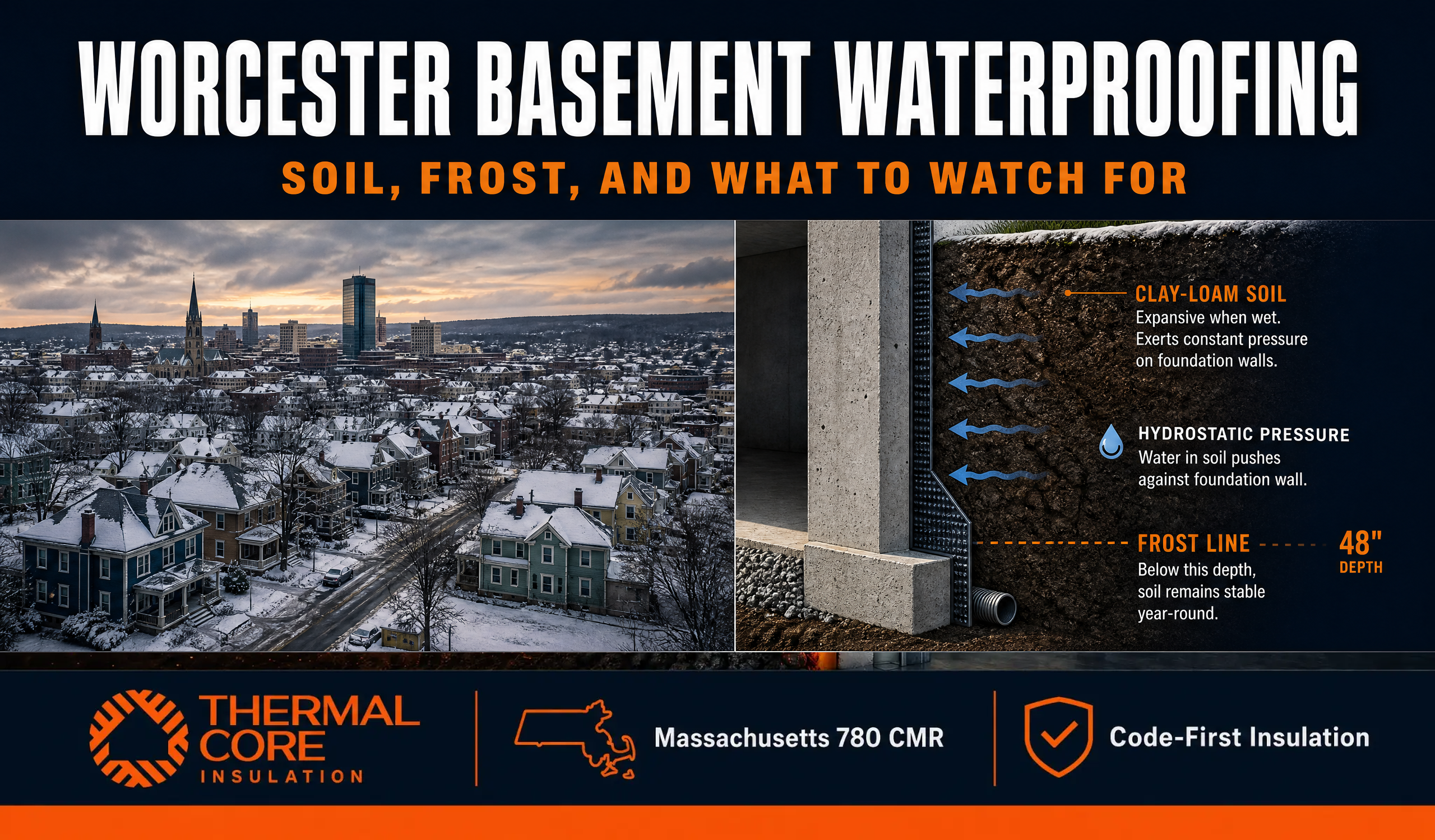
Waterproofing is a structural intervention designed to combat hydrostatic pressure. When it rains heavily in Massachusetts, the soil around your foundation becomes saturated. Water is heavy—weighing roughly 60 pounds per cubic foot. As the soil fills with water, gravity pulls it downward, creating immense pressure against your basement walls and floor.
Waterproofing systems are built to either physically block this pressure from the outside or safely manage and redirect the water from the inside. According to waterproofing technical standards, true exterior waterproofing involves thick, elastic membranes (often 40 mils or thicker) that can stretch over cracks, paired with dimple boards that relieve the physical pressure of the water against the wall.
Interior waterproofing, conversely, acknowledges that water will eventually breach the concrete. Instead of trying to paint over the leak, interior systems use perimeter drains and sump pumps to capture the water beneath the slab and eject it before it ever touches your finished floor.
Why Paint-On Sealers Fail in Massachusetts Basements
The most common mistake we see in New England basements is the reliance on interior waterproof paints or sealers (like Drylok) to solve active leaks.
When you paint the inside of a basement wall, you are attempting to hold back the entire weight of the saturated earth outside using a millimeter-thick layer of latex. The hydrostatic pressure simply pushes the water through the concrete block. When the water reaches the inside face of the block, it hits the paint.
The pressure builds behind the paint until it eventually blisters, peels, and flakes off. Worse, because the water is trapped inside the concrete block behind the paint, it accelerates the degradation of the masonry itself, leading to severe efflorescence and structural weakening.
If your basement has active leaks, standing water, or signs of efflorescence, a sealer will not fix the problem. You are treating a symptom, not the disease.
How to Tell Which Solution You Need
Determining whether you need a simple sealer or a comprehensive waterproofing system comes down to diagnosing the source of the moisture.
The Foil Test for Condensation vs. Intrusion
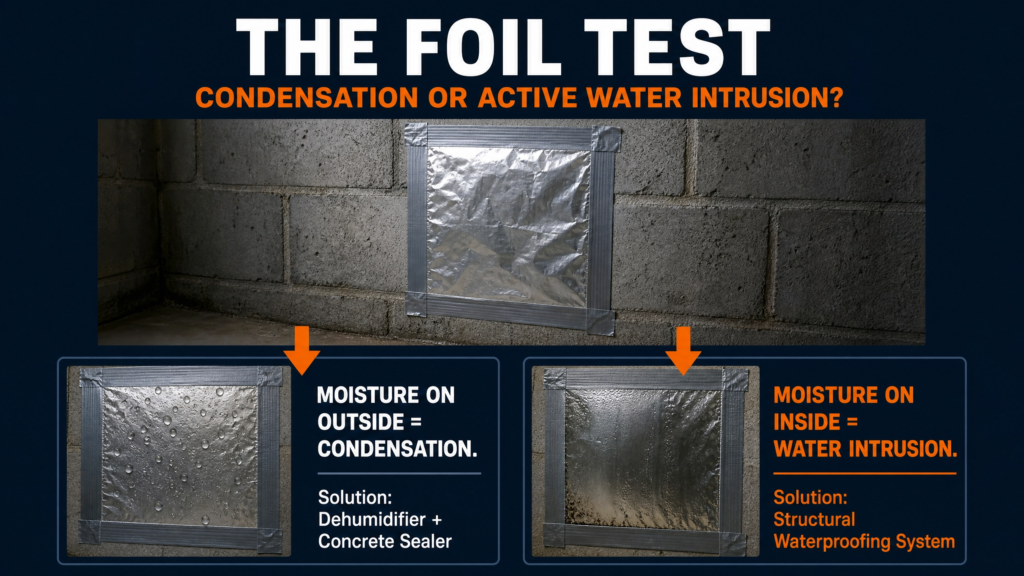
If your basement walls feel damp, you need to know if the water is coming from the outside in (intrusion) or from the inside out (condensation).
Tape a square of aluminum foil tightly to your basement wall, sealing all four edges with duct tape. Leave it for 48 hours.
- If moisture forms on the outside of the foil (facing the room), your problem is high indoor humidity condensing on the cold concrete wall. A dehumidifier and a concrete sealer may be all you need.
- If moisture forms on the inside of the foil (between the foil and the concrete), water is physically pushing through the foundation. You need a waterproofing system.
When to Use a Concrete Sealer
- You have a poured concrete foundation with no active leaks or cracks.
- Your only issue is minor dampness or a slight musty smell from soil humidity.
- You want to reduce concrete dusting and make the floor easier to sweep.
- You have verified that the moisture is purely condensation-based.
When to Invest in Basement Waterproofing
- You experience active puddles or standing water after heavy rainstorms or the spring thaw.
- You have visible horizontal cracks or stair-step cracks in your block foundation.
- You see thick, white, chalky powder (efflorescence) blooming on the walls.
- You have water seeping in where the floor meets the wall (the cove joint).
- You are planning to finish the basement with drywall, flooring, and spray foam insulation.
The Code-First Approach to Basement Finishing
At Thermalcore, we operate under a strict Code-First philosophy. We regularly turn down basement insulation jobs because the homeowner wants us to spray foam over a damp, unwaterproofed wall.
Closed-cell spray foam is an exceptional vapor barrier and insulator, but it is not a waterproofing system. If you spray foam over an active leak, you are trapping hydrostatic pressure behind the foam. Eventually, the water will find a way out, usually by rotting the sill plate or destroying the finished drywall.
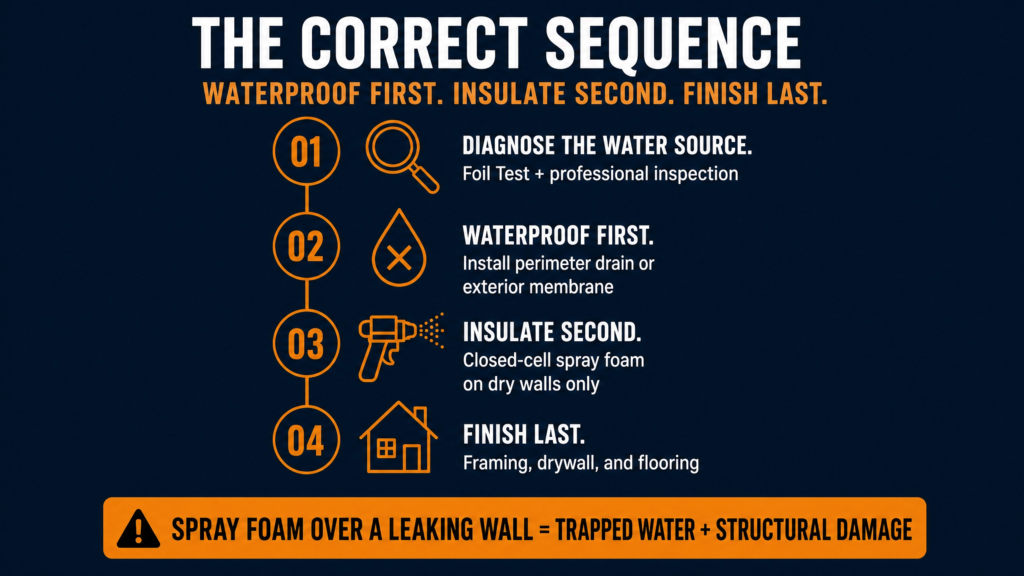
If you are planning a basement renovation, the sequence of operations is non-negotiable:
- Diagnose the water source.
- Install a proper waterproofing system (interior perimeter drain or exterior excavation) if hydrostatic pressure is present.
- Apply closed-cell spray foam insulation to the dry walls.
- Install framing and drywall.
Do not let a contractor tell you that spray foam or waterproof paint will solve a flooding basement. It will only hide the problem until the damage becomes catastrophic.
Protect Your Investment
Understanding the difference between waterproofing and sealing is the first step in protecting your home. A sealer is a maintenance product; waterproofing is a structural solution.
If you are dealing with a wet basement in Massachusetts and want to ensure your home is protected the right way, contact Thermalcore Insulation today. We can help you assess your foundation, recommend the proper sequence of repairs, and provide the high-performance insulation your home needs once the water is managed.