
Understanding the Massachusetts Energy Code

Understanding the Massachusetts Energy Code: What Homeowners and Contractors Need to Know

Summary

Massachusetts has some of the strictest energy efficiency regulations in the country. For both homeowners and contractors, understanding the Massachusetts Energy Code is essential when planning insulation and building projects.

Here’s what you need to know.

What Is the Massachusetts Energy Code?

The Massachusetts Building Energy Code (780 CMR 9th Edition) sets requirements for insulation, air sealing, and overall energy performance in buildings. Its goal is to reduce energy consumption, lower costs, and promote sustainability.

Why It Matters for Homeowners and Contractors

  • Ensures your home is energy-efficient and comfortable.
  • Helps contractors avoid costly mistakes or project delays.
  • Increases property value by meeting green building standards.

Insulation Requirements in Massachusetts

R-value Standards:
The R-value measures insulation’s resistance to heat flow. Massachusetts requires specific R-values depending on building zone and area of the house:

  • Attic: R-49 or higher
  • Walls: R-20 or higher
  • Basements/Crawl Spaces: R-10 or higher

Spray Foam and Code Compliance:
Closed-cell spray foam often exceeds minimum R-value requirements with fewer inches of material — making it a top choice for contractors.

Common Mistakes in Meeting Code

  • Using outdated insulation methods.
  • Ignoring air leakage control.
  • Failing to insulate basements or crawl spaces.

How Thermalcore Helps You Stay Compliant

At Thermalcore Insulation, we:

  • Use insulation materials that meet or exceed Massachusetts energy standards.
  • Offer expert guidance for contractors and homeowners.
  • Ensure every project passes inspection and avoids compliance issues.

Stay compliant and energy-efficient with Thermal Core Insulation. Contact us today for a free consultation and ensure your project meets Massachusetts Energy Code requirements.
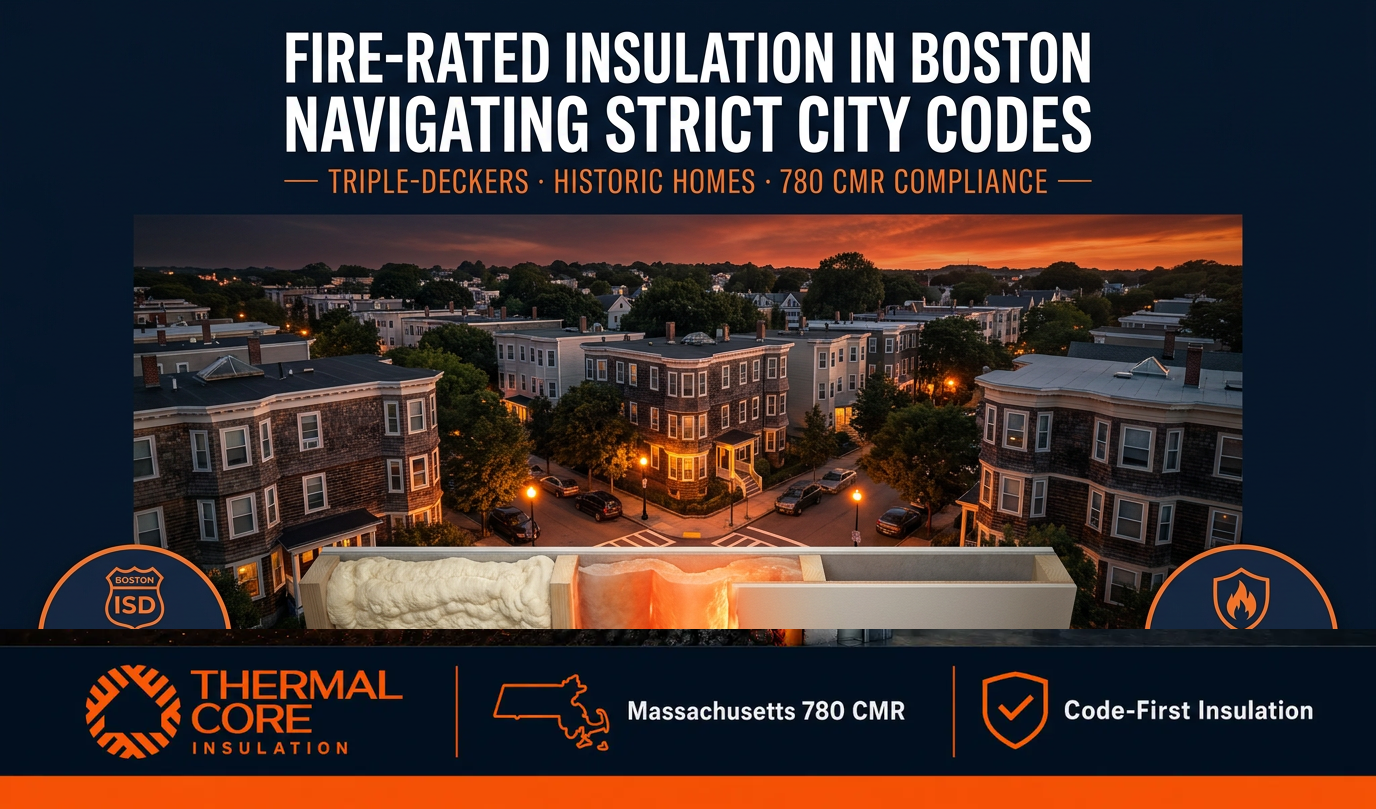
ThermalCore Insulation infographic highlighting fire-rated spray foam insulation solutions for Boston's historic homes and triple-decker buildings. The graphic focuses on Massachusetts 780 CMR compliance, fire-safe insulation systems, and code-first solutions that preserve older buildings while improving energy efficiency.

Fire-Rated Insulation in Boston: Navigating Strict City Codes

A spray foam thermal barrier Boston requirement is not just a suggestion; it is one of the most strictly enforced building codes in the city. When property owners in Boston decide to upgrade their insulation, they often focus entirely on the energy savings. They want to stop the drafty winter winds off the harbor and lower their summer cooling costs.

What they do not realize is that in the City of Boston, every insulation job is also a fire safety job.

Boston has a unique housing stock, dominated by historic brick rowhouses and the iconic wood-frame triple-decker. These older structures are highly susceptible to rapid fire spread. Because of this history, the Boston Inspectional Services Department (ISD ) enforces the Massachusetts state building code with absolute precision. If you install spray foam insulation without the required fire protection, your project will fail inspection, and you will be issued a stop-work order.

Read More
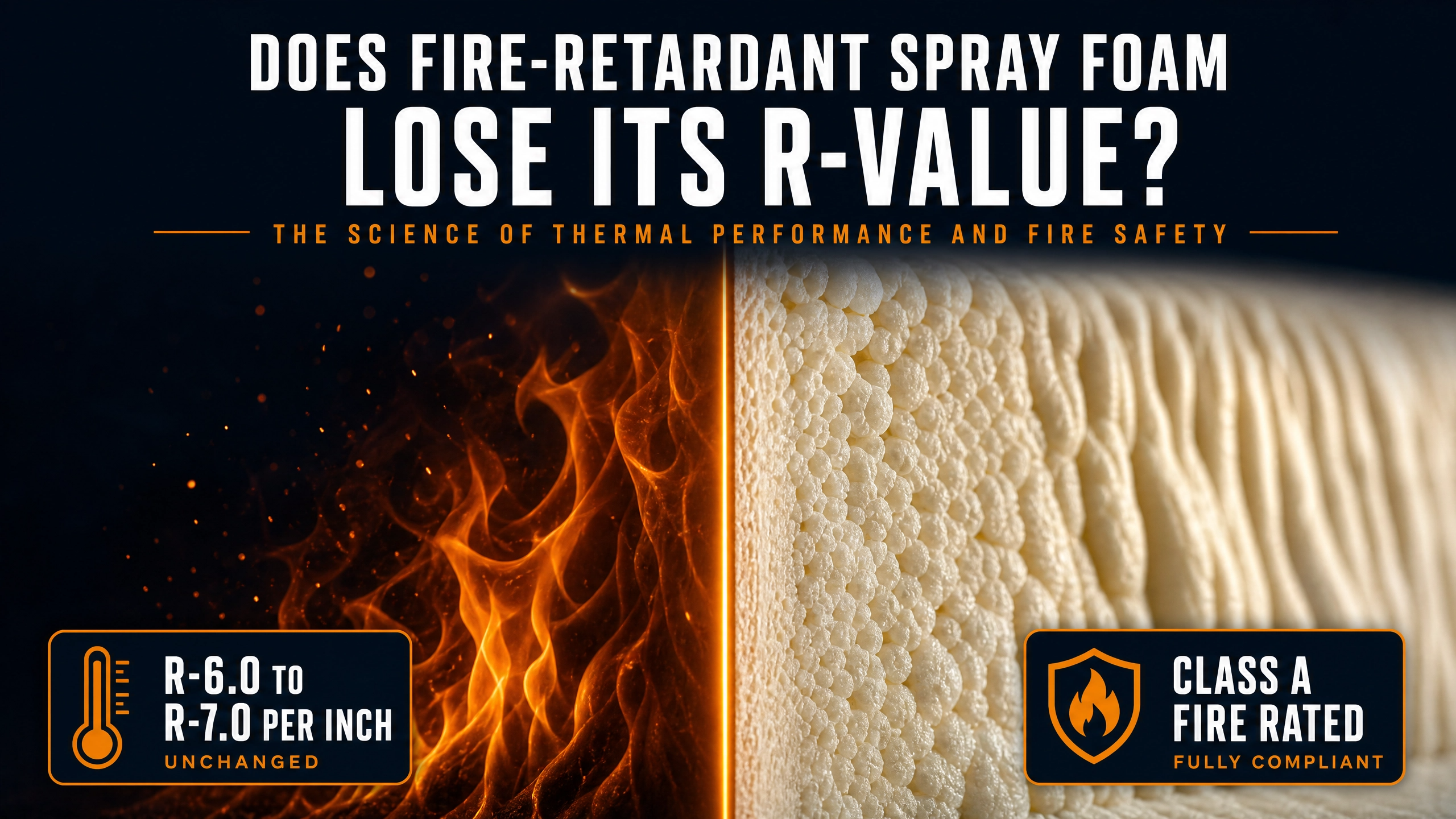
ThermalCore Insulation infographic explaining that fire-retardant spray foam does not lose its R-value. The graphic compares thermal performance and fire safety, highlighting that closed-cell spray foam maintains an R-6.0 to R-7.0 per inch insulation value while achieving a fully compliant Class A fire rating.

Does Fire-Retardant Spray Foam Lose Its R-Value?

Fire-retardant spray foam R-value does not drop when protective chemicals are added to the mix, but it is one of the most common concerns we hear from Massachusetts homeowners investing in high-performance insulation.

The logic is understandable. When you learn that your spray foam needs fire-retardant additives or an intumescent coating to meet strict building codes, a natural question follows: If we are adding chemicals to stop fire, are we compromising the foam’s ability to stop heat?

Read More
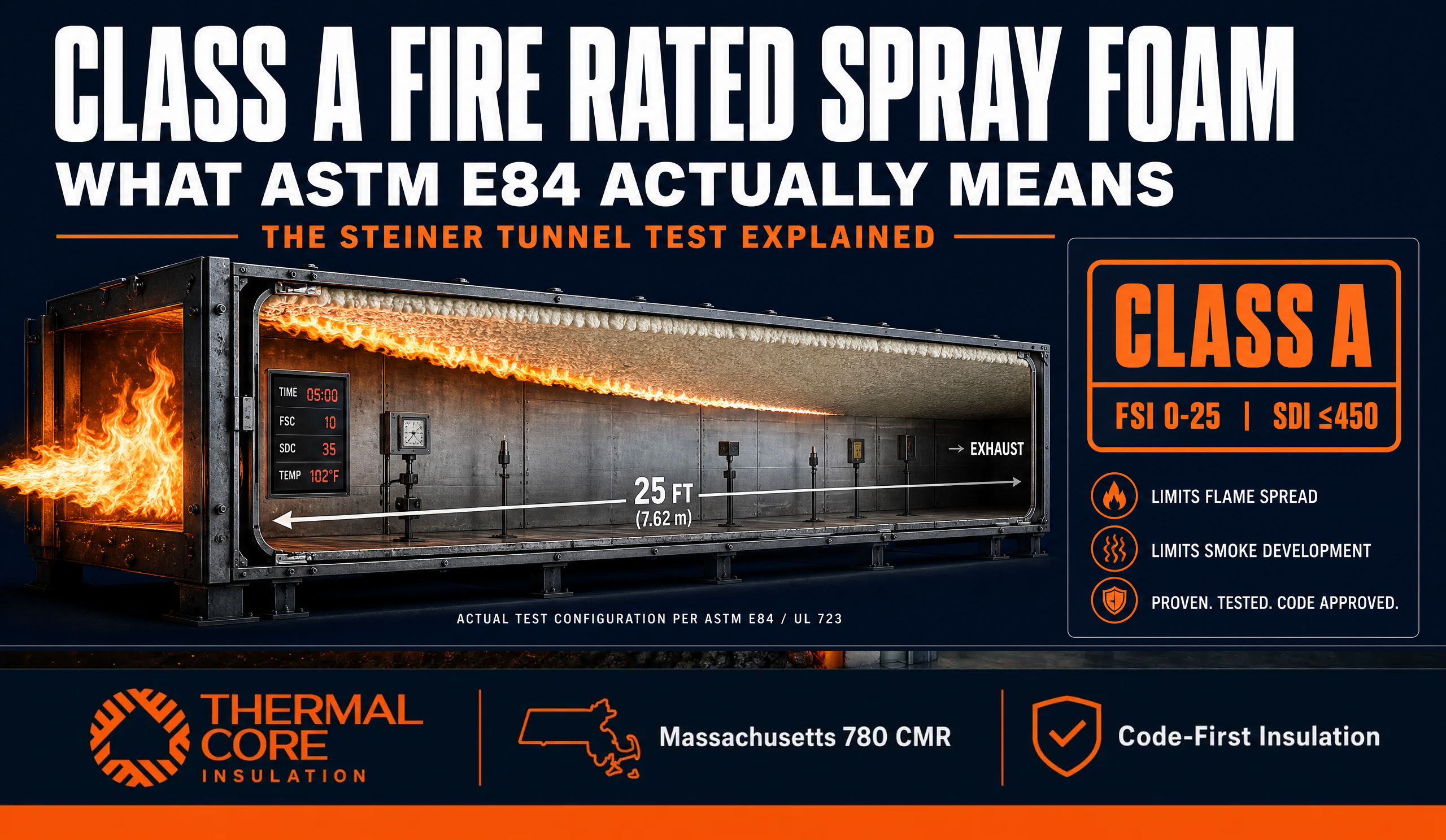
Cover infographic explaining ASTM E84 Class A fire ratings for spray foam insulation, showing the Steiner Tunnel test and Flame Spread Index (FSI) and Smoke Developed Index (SDI) requirements.

What does an ASTM E84 spray foam Class A fire rating mean?

An ASTM E84 Class A fire rating means the spray foam insulation has a Flame Spread Index of 0–25 and a Smoke Developed Index of 450 or less when tested in a 25-foot tunnel. However, a Class A rating only measures surface burning characteristics. It does not replace the building code requirement for a 15-minute thermal barrier over the foam in occupied spaces.

ASTM E84 spray foam Class A fire ratings are perhaps the most misunderstood metric in the insulation industry. If you are a homeowner or a builder in Massachusetts, you have likely heard a contractor say, “Don’t worry, this spray foam is Class A fire-rated, so it’s completely safe to leave exposed.”

Read More