
Understanding the Massachusetts Energy Code

Understanding the Massachusetts Energy Code: What Homeowners and Contractors Need to Know

Summary

Massachusetts has some of the strictest energy efficiency regulations in the country. For both homeowners and contractors, understanding the Massachusetts Energy Code is essential when planning insulation and building projects.

Here’s what you need to know.

What Is the Massachusetts Energy Code?

The Massachusetts Building Energy Code (780 CMR 9th Edition) sets requirements for insulation, air sealing, and overall energy performance in buildings. Its goal is to reduce energy consumption, lower costs, and promote sustainability.

Why It Matters for Homeowners and Contractors

  • Ensures your home is energy-efficient and comfortable.
  • Helps contractors avoid costly mistakes or project delays.
  • Increases property value by meeting green building standards.

Insulation Requirements in Massachusetts

R-value Standards:
The R-value measures insulation’s resistance to heat flow. Massachusetts requires specific R-values depending on building zone and area of the house:

  • Attic: R-49 or higher
  • Walls: R-20 or higher
  • Basements/Crawl Spaces: R-10 or higher

Spray Foam and Code Compliance:
Closed-cell spray foam often exceeds minimum R-value requirements with fewer inches of material — making it a top choice for contractors.

Common Mistakes in Meeting Code

  • Using outdated insulation methods.
  • Ignoring air leakage control.
  • Failing to insulate basements or crawl spaces.

How Thermalcore Helps You Stay Compliant

At Thermalcore Insulation, we:

  • Use insulation materials that meet or exceed Massachusetts energy standards.
  • Offer expert guidance for contractors and homeowners.
  • Ensure every project passes inspection and avoids compliance issues.

Stay compliant and energy-efficient with Thermal Core Insulation. Contact us today for a free consultation and ensure your project meets Massachusetts Energy Code requirements.
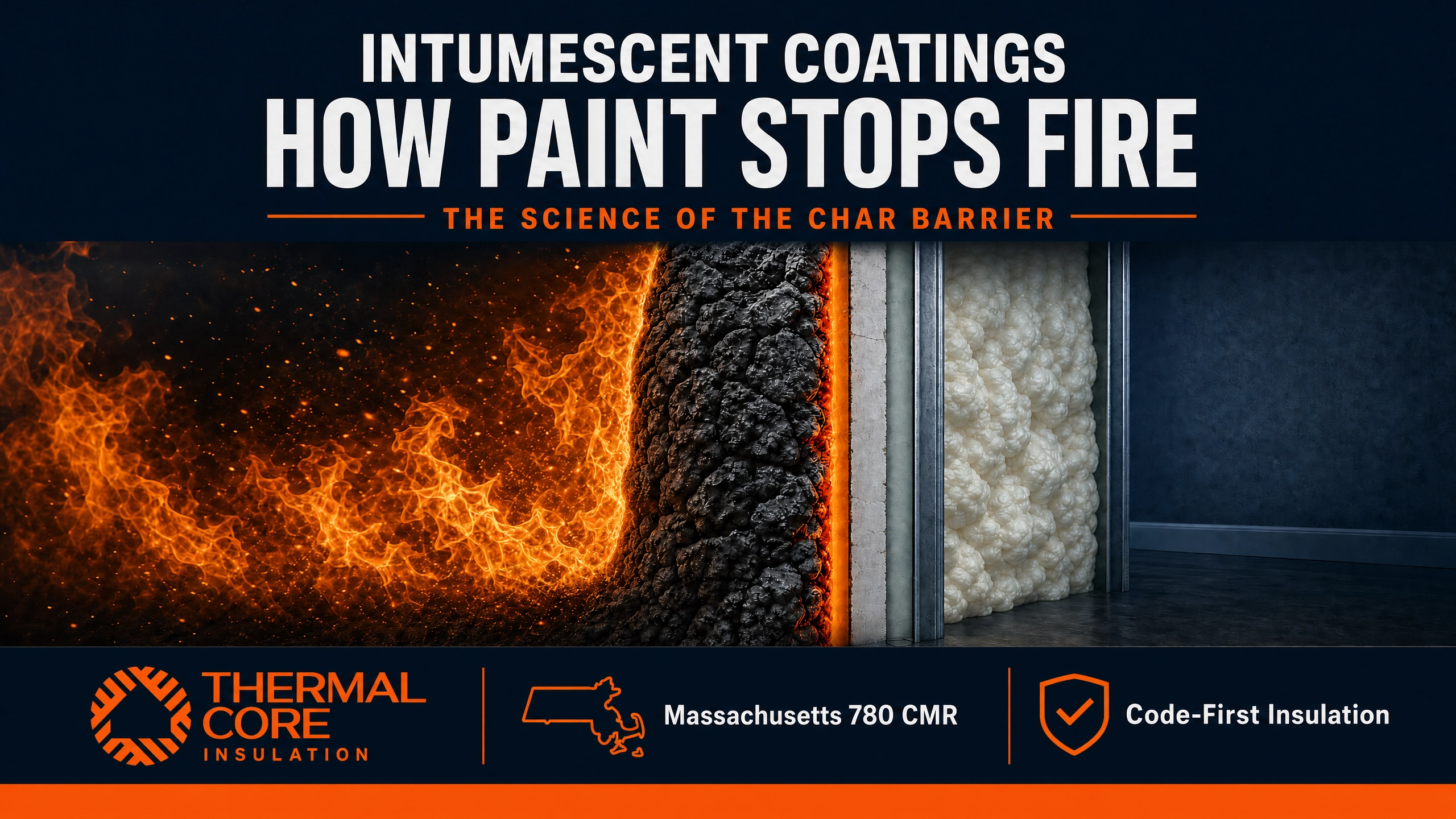
Cover infographic showing how intumescent coatings create a protective char barrier over spray foam insulation, illustrating the science behind passive fire protection and Massachusetts code-compliant thermal barriers.

Intumescent Coatings: How Paint Stops Fire

Intumescent coating spray foam insulation protection is one of the most misunderstood and most critical requirements in the Massachusetts building code. When homeowners learn that exposed spray foam is a fire hazard and a severe code violation, the next question is usually about drywall.

While 1/2-inch gypsum is the standard thermal barrier, it is not always practical. In retrofitted basements, complex commercial roof decks, or historic attics, hanging drywall over irregular spray foam surfaces can be difficult and expensive. This is where intumescent coatings come in.

Often called “fireproof paint,” an intumescent coating is a highly engineered chemical barrier. It is the liquid equivalent of drywall, providing the critical 15 minutes of fire protection required by building codes.

Read More
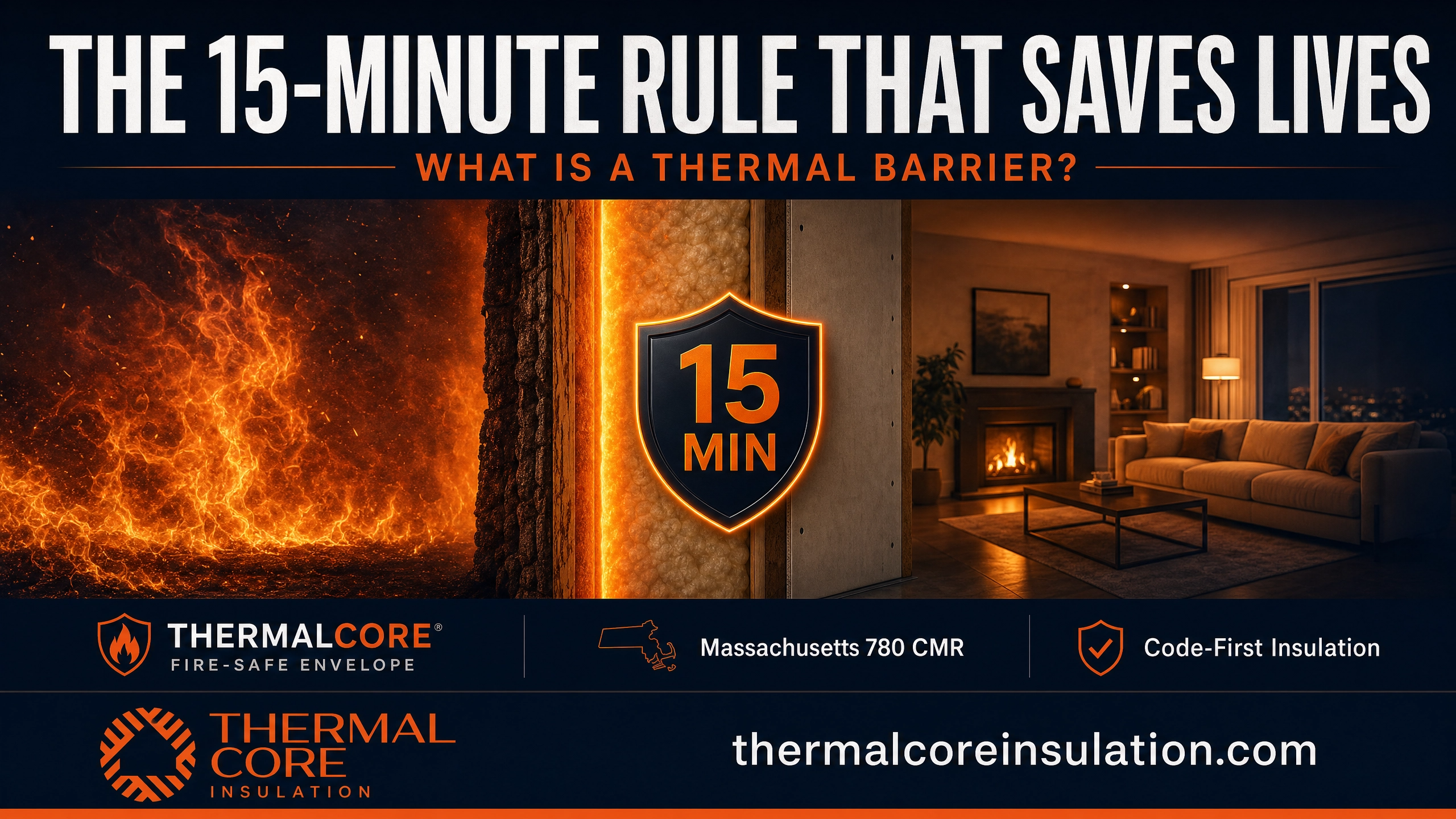
Cover infographic illustrating the 15-minute thermal barrier concept for spray foam insulation, showing a fire-resistant wall assembly separating flames from a living space in compliance with Massachusetts 780 CMR.

What is a Thermal Barrier? The 15-Minute Rule That Saves Lives

If you have exposed spray foam insulation in your basement, garage, or living space, you are likely sitting on a severe building code violation. When it comes to thermal barrier spray foam Massachusetts regulations, the state is unforgiving. Spray foam is an incredible insulator, but it is a foam plastic. In a fire, foam plastics can accelerate the spread of flames and release toxic smoke.

That is why building codes mandate a thermal barrier, a protective layer designed to separate the foam from the interior of your home. It is the foundation of what we call the Thermalcore Fire-Safe Envelope.

Read More
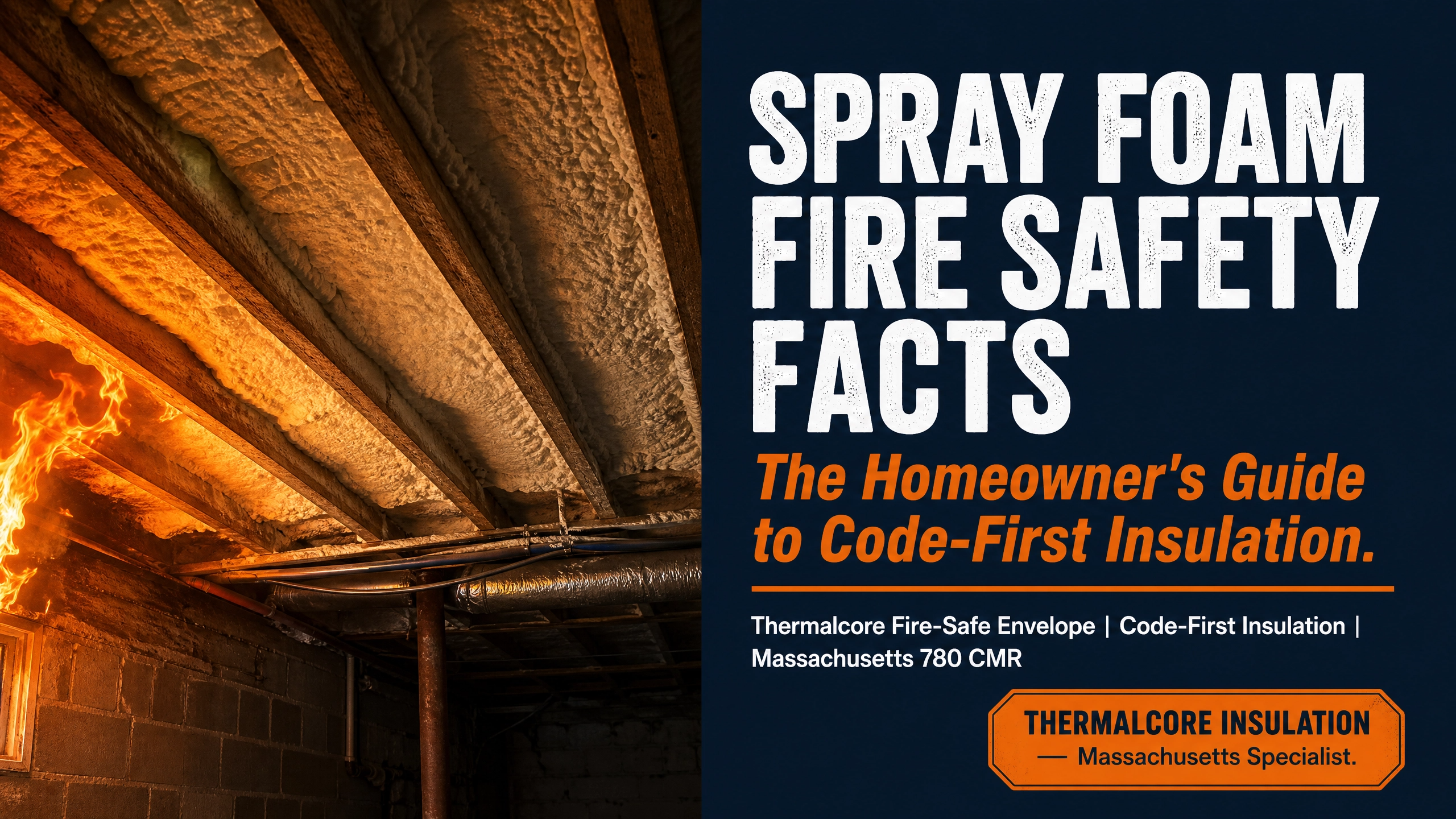
Thermal Core Insulation cover infographic introducing spray foam fire safety facts for Massachusetts homeowners, explaining building code requirements, thermal barriers, ASTM E84 ratings, and safe closed-cell spray foam installation.

Spray Foam Fire Safety Facts: Homeowner’s Guide to Code-First Insulation

If you are researching insulation upgrades for your Massachusetts home, you want facts, not fearmongering. When it comes to spray foam fire safety facts, the internet is full of conflicting information. One website claims spray foam is highly flammable, while a contractor’s brochure claims their product is “Class A Fire Rated” and perfectly safe.

The truth lies in the building science. Spray foam is an incredibly effective insulator, but it is a combustible plastic. Its safety depends entirely on how it is installed and protected.

Read More