If you have exposed spray foam insulation in your basement, garage, or living space, you are likely sitting on a severe building code violation. When it comes to thermal barrier spray foam Massachusetts regulations, the state is unforgiving. Spray foam is an incredible insulator, but it is a foam plastic. In a fire, foam plastics can accelerate the spread of flames and release toxic smoke.
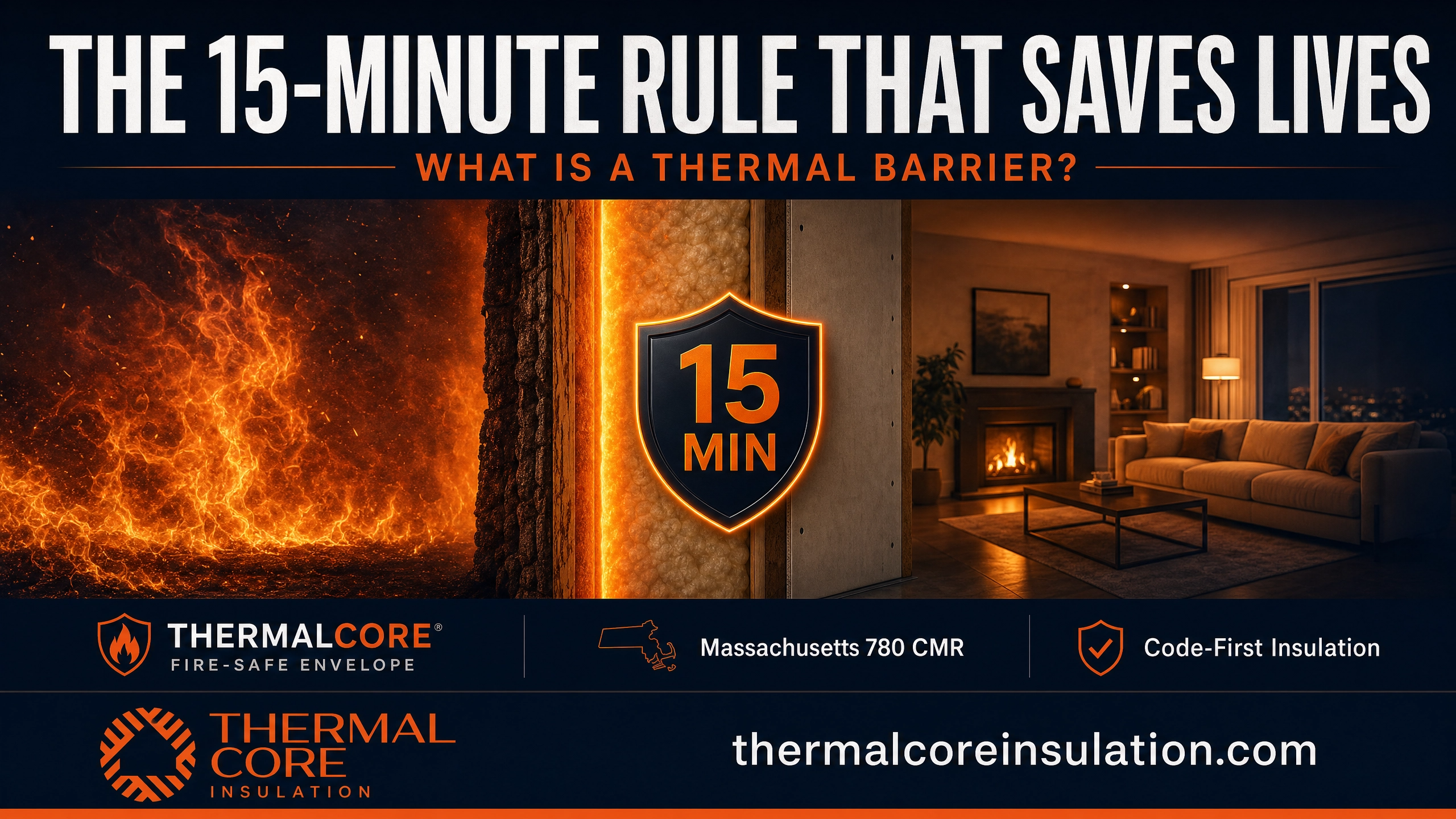
That is why building codes mandate a thermal barrier, a protective layer designed to separate the foam from the interior of your home. It is the foundation of what we call the Thermalcore Fire-Safe Envelope.
In this guide, we will break down exactly what a thermal barrier is, the science behind the “15-minute rule,” the critical difference between thermal and ignition barriers, and how to ensure your Massachusetts home is safe, compliant, and protected.
The Science of the Thermal Barrier
A thermal barrier is not just a piece of drywall; it is a precisely engineered, code-mandated fire-resistive assembly. Its sole purpose is to delay the ignition of the foam behind it during a fire.
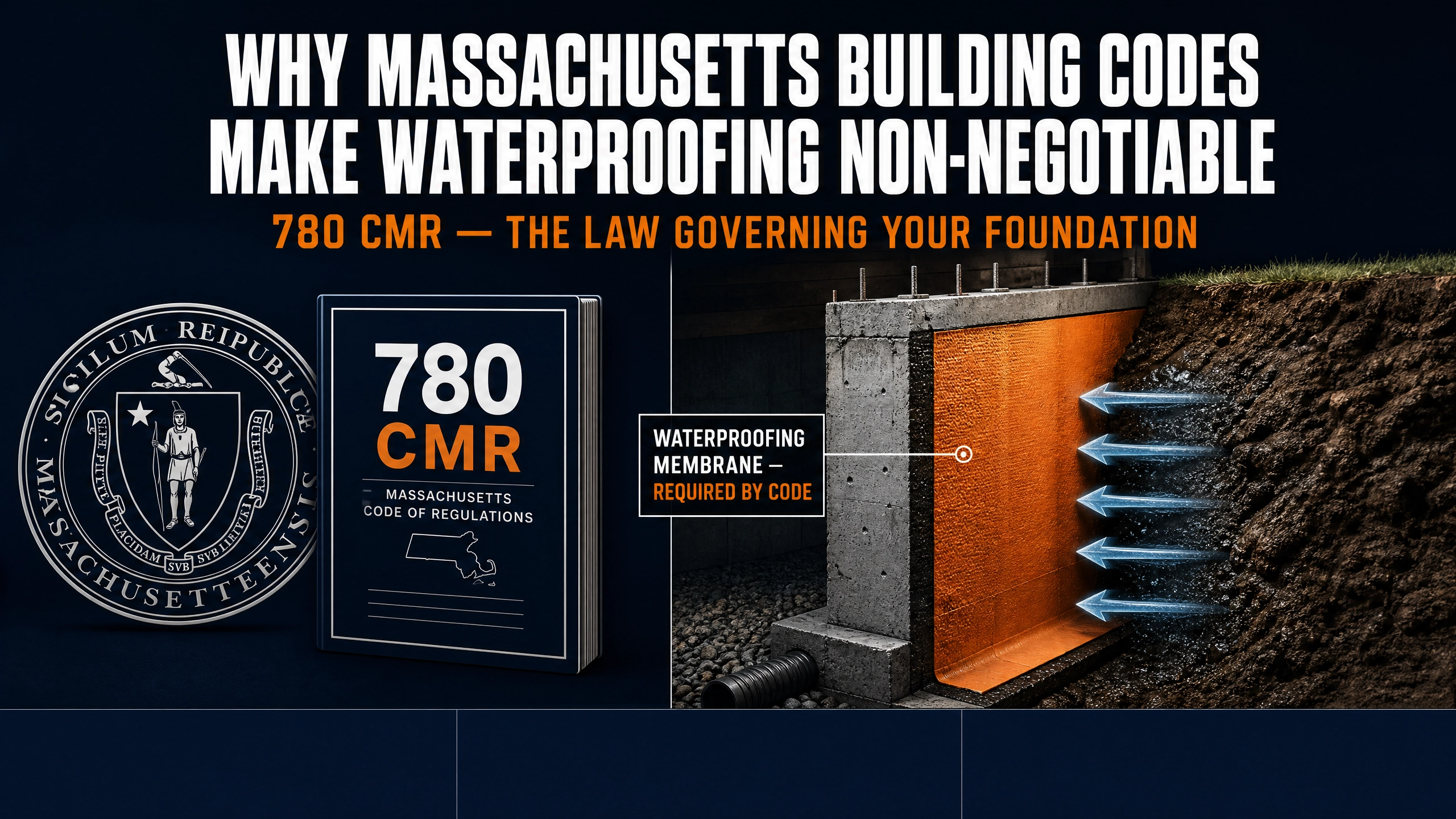
According to Massachusetts 780 CMR Chapter 26, which adopts the International Building Code (IBC), all foam plastic insulation must be separated from the interior of a building by an approved thermal barrier. The standard for this barrier is 1/2-inch gypsum wallboard (drywall), or an equivalent material that has passed rigorous testing.
But what exactly is the barrier doing? It is buying you time.
The 15-Minute Rule (ASTM E119)
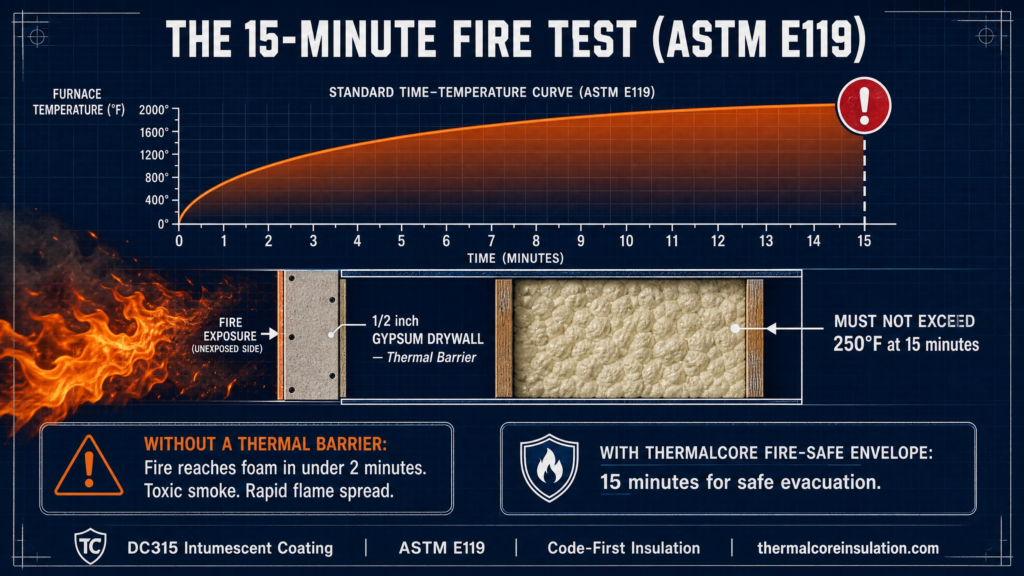
The core requirement of a thermal barrier is the 15-minute rule. During a standard fire test, known as ASTM E119, the thermal barrier must limit the average temperature rise on the unexposed surface (the side touching the foam) to no more than 250°F after 15 minutes of direct fire exposure.
Why 15 minutes? Because fire safety engineers and code officials have determined that 15 minutes is the critical window needed for occupants to safely evacuate a building and for firefighters to arrive on the scene. If the fire reaches the foam before that 15-minute mark, the situation can escalate rapidly. This is why “Class A” fire-rated foam is not enough on its own.
As we discussed in our previous article on spray foam fire safety facts, Class A ratings measure surface burning characteristics, not the fire-resistance time that a thermal barrier provides.
Thermal Barrier vs. Ignition Barrier
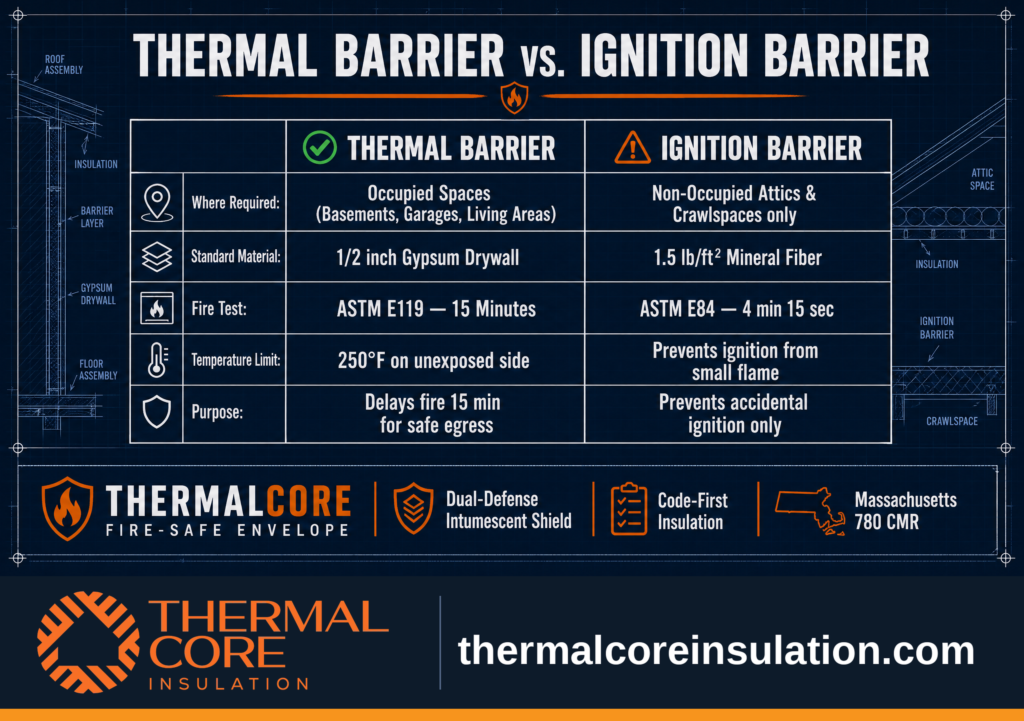
One of the most common and dangerous mistakes in the insulation industry is confusing a thermal barrier with an ignition barrier. They sound similar, but they serve entirely different purposes and are governed by different rules.
Thermal Barrier
- Where it is required: Any occupied space. This includes living areas, finished basements, and attached garages.
- The standard: 1/2-inch gypsum drywall or an equivalent 15-minute assembly.
- The purpose: To delay a full-scale fire from reaching the foam for 15 minutes, allowing for safe egress.
Ignition Barrier
- Where it is required: Non-occupied spaces that are only accessed for service or maintenance, such as unfinished attics and crawlspaces.
- The standard: Less stringent materials, such as 1.5 lb/ft² mineral fiber insulation or 3/8-inch OSB.
- The purpose: To prevent the foam from igniting due to a small, accidental open flame, like a plumber’s torch or an electrical spark. It is tested under a shorter, 4-minute-and-15-second fire test.
As detailed by the experts at R-Value Associates, using an ignition barrier where a thermal barrier is required (like leaving foam exposed in a basement or using the wrong coating) is a guaranteed way to fail an inspection.
Intumescent Coatings
What happens when you cannot install drywall? In commercial buildings, complex roof decks, or retrofitted basements, hanging drywall over spray foam is not always practical. This is where intumescent coatings come in.
An intumescent coating is a specialized, fire-retardant paint that swells and chars when exposed to extreme heat. This chemical reaction creates a thick, insulating ash layer that protects the foam underneath, effectively acting as a liquid thermal barrier. At Thermalcore, we utilize a Dual-Defense Intumescent Shield approach when drywall is not an option.
However, not just any paint will work. To qualify as a thermal barrier, the intumescent coating must be rigorously tested and approved. Products like DC315 are tested in accordance with the Acceptance Criteria for Fire-Protective Coatings (AC456).
As the manufacturers of DC315 at PaintToProtect explain, the coating must be listed in an ICC-ES evaluation report, tested specifically with the exact brand of spray foam being used, and applied at a precise thickness (measured in mils).
If a contractor sprays an unapproved paint, or applies an approved paint too thinly, you do not have a thermal barrier. You have a fire hazard.
Common Code Violations in Massachusetts
In Massachusetts, local building inspectors are increasingly cracking down on improperly protected spray foam. The Mass Nail It continuing education program for construction supervisors frequently highlights these exact code requirements because violations are so common.
Here are the most frequent violations we see:
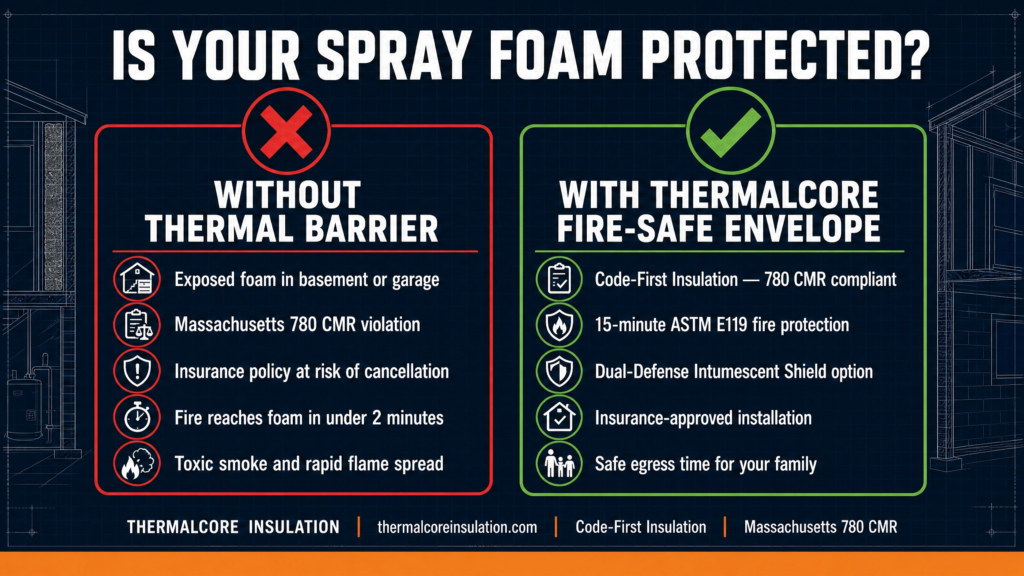
- Exposed Foam in Basements: Homeowners often hire a contractor to spray their basement walls and leave the foam exposed to save money. This is illegal and dangerous. If you are looking into basement waterproofing costs, ensure your contractor includes the cost of a proper thermal barrier.
- Exposed Foam in Garages: Even if the garage is detached, if it is used as a workspace or storage area, the foam usually needs a thermal barrier.
- The Wrong Coating: Contractors using cheap, unrated paint instead of a certified intumescent coating.
- Insurance Cancellations: Homeowners are increasingly finding that their homeowners insurance is being canceled because an inspector spotted exposed spray foam.
Code-First Insulation
At Thermalcore Insulation, we do not cut corners on fire safety. We practice Code-First Insulation. This means that before we spray a single drop of foam, we have a clear, documented plan for protecting that foam from fire.
Whether it is coordinating with your drywall contractor or applying a precise, mil-measured layer of certified intumescent coating, we ensure your home meets the strict requirements of Massachusetts 780 CMR. We do not just insulate your home; we build a complete Thermalcore Fire-Safe Envelope.
If you have existing spray foam in your home and you are unsure if it is properly protected, or if you are planning a new insulation project, do not leave your family’s safety to chance. Contact Thermalcore Insulation today for a comprehensive assessment of your spray-foam fire-safety needs.