
For any Massachusetts homeowner, the threat of ice dams is a familiar winter worry. But the real solution isn’t just about your roof; it’s about creating a high-performance spray foam insulation attic in Massachusetts. A poorly insulated and leaky attic acts like a chimney, funneling the expensive heat from your living space up to the underside of your roof, melting snow from below and starting a destructive cycle.
This is more than just a winter eyesore, it’s a sign of a critical failure in your home’s performance and a direct threat to its structural integrity.
Many homeowners blame their gutters or the weather, but the real culprit is your attic. A poorly insulated and leaky attic acts like a chimney, funneling the expensive heat from your living space up to the underside of your roof. This melts the snow from below, and when the water refreezes at the cold edge of the roof, a destructive cycle begins.
This guide will explain the modern, building-science-backed solution to this chronic problem: creating an unvented, conditioned attic with spray foam insulation. It’s the definitive way to protect your home from ice dams, dramatically improve comfort, and lower your energy bills.
The Old Way vs. The New Way
For decades, the standard approach to attic insulation was to pile fiberglass or cellulose on the attic floor and use vents to try and keep the attic cold. The theory was that a cold attic wouldn’t melt the snow on the roof. In practice, especially in our cold climate, this method is fundamentally flawed.
The traditional vented attic fails because it doesn’t stop air leakage. Warm air from your home still rises and escapes, creating the perfect conditions for ice dams. Furthermore, any ductwork or HVAC equipment in a vented attic is operating in extreme temperatures, losing a massive amount of energy and forcing your system to work much harder.
The modern, building-science-approved method is to create an unvented attic. This involves applying insulation directly to the underside of the roof deck, which brings the entire attic space inside your home’s conditioned thermal envelope. The results are transformative.
| Feature | Traditional Vented Attic | Modern Unvented Attic (with Spray Foam) |
|---|---|---|
| Insulation Location | On the attic floor | On the underside of the roof deck |
| Air Sealing | Prone to leaks (chimney effect) | Creates a perfect, monolithic air seal |
| Ice Dam Risk | High | Virtually eliminated |
| Ductwork Efficiency | Poor (exposed to extreme temps) | High (within the conditioned space) |
| Result | An energy-losing buffer zone | A clean, conditioned, efficient space |
Why Spray Foam is the Gold Standard for Attics in Massachusetts
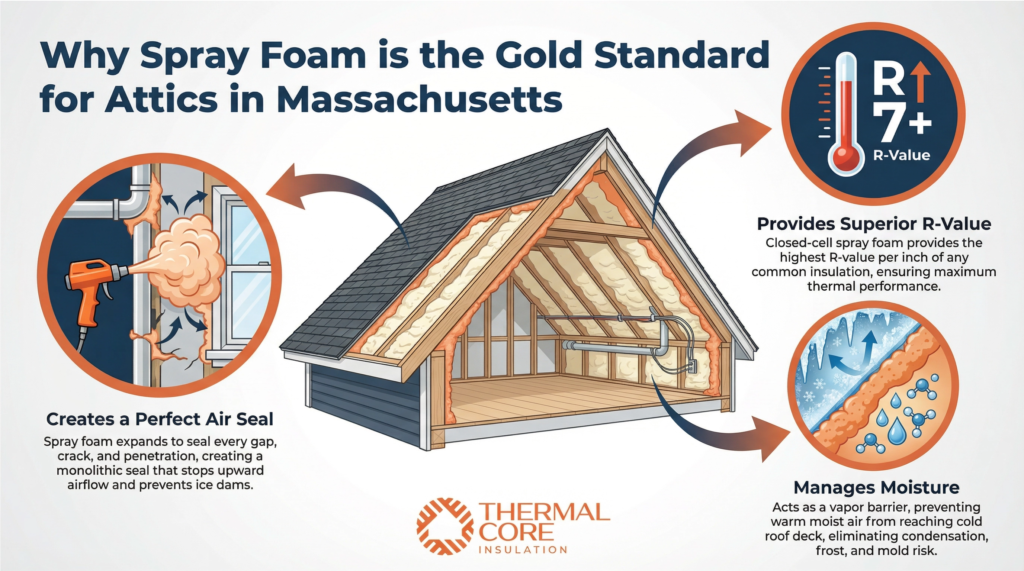
To create a successful unvented attic, you need an insulation material that can do two things perfectly: stop air movement and provide a high R-value. This is why spray foam is the gold standard.
It Creates a Perfect Air Seal: Spray foam’s most critical feature is its ability to expand and seal every gap, crack, and penetration. This monolithic seal is what stops the upward flow of warm air that is the root cause of ice dams.
It Provides Superior R-Value: The roof is your home’s primary barrier against solar heat gain in the summer and heat loss in the winter. Spray foam, particularly closed-cell, provides the highest R-value per inch of any common insulation material, ensuring maximum thermal performance.
It Manages Moisture: Closed-cell spray foam acts as a vapor barrier, preventing warm, moist air from inside the house from reaching the cold roof deck in the winter. This prevents condensation, frost, and the potential for mold growth and rot.
For a more detailed benefits of Spray Foam to your home read our blog: The Benefits of Spray Foam Insulation for Massachusetts Homeowners
The Definitive Solution to Ice Dams
Let’s be crystal clear about how ice dams form and how spray foam stops them.
- The Problem: Heat escapes from your living space into your vented attic. This heat warms the roof deck, melting snow from the bottom up. The meltwater runs down to the cold eaves and refreezes, forming a dam. Water then backs up behind this dam, seeping under shingles and leaking into your home, causing water-stained ceilings, ruined insulation, and dangerous mold.
- The Solution: An unvented attic insulated with closed-cell spray foam keeps the roof deck the same temperature as the outside air. Snow on the roof is no longer melted from below. It melts naturally from the top down when the sun comes out or the air temperature rises, draining away harmlessly as it should. The cycle is broken, permanently.
Professional Recommendation: Closed-Cell for Your Attic
While both open-cell and closed-cell foam are effective air barriers, for attic applications in Massachusetts, closed-cell spray foam is the superior and professionally recommended choice.
Its high R-value is crucial for the roof, which is exposed to the most extreme temperatures. More importantly, its vapor impermeability is essential to prevent condensation on the cold roof deck during our long winters, protecting your roof structure from moisture damage. The added rigidity of closed-cell foam also provides extra strength to the roof assembly.
The Installation Process: What to Expect
The process of transforming your attic is straightforward and professional:
- Assessment: A specialist will inspect your attic, often using a thermal camera to identify air leaks, and provide a detailed proposal.
- Preparation: The area is cleared, and old, ineffective insulation is removed. All surfaces not being sprayed are meticulously covered.
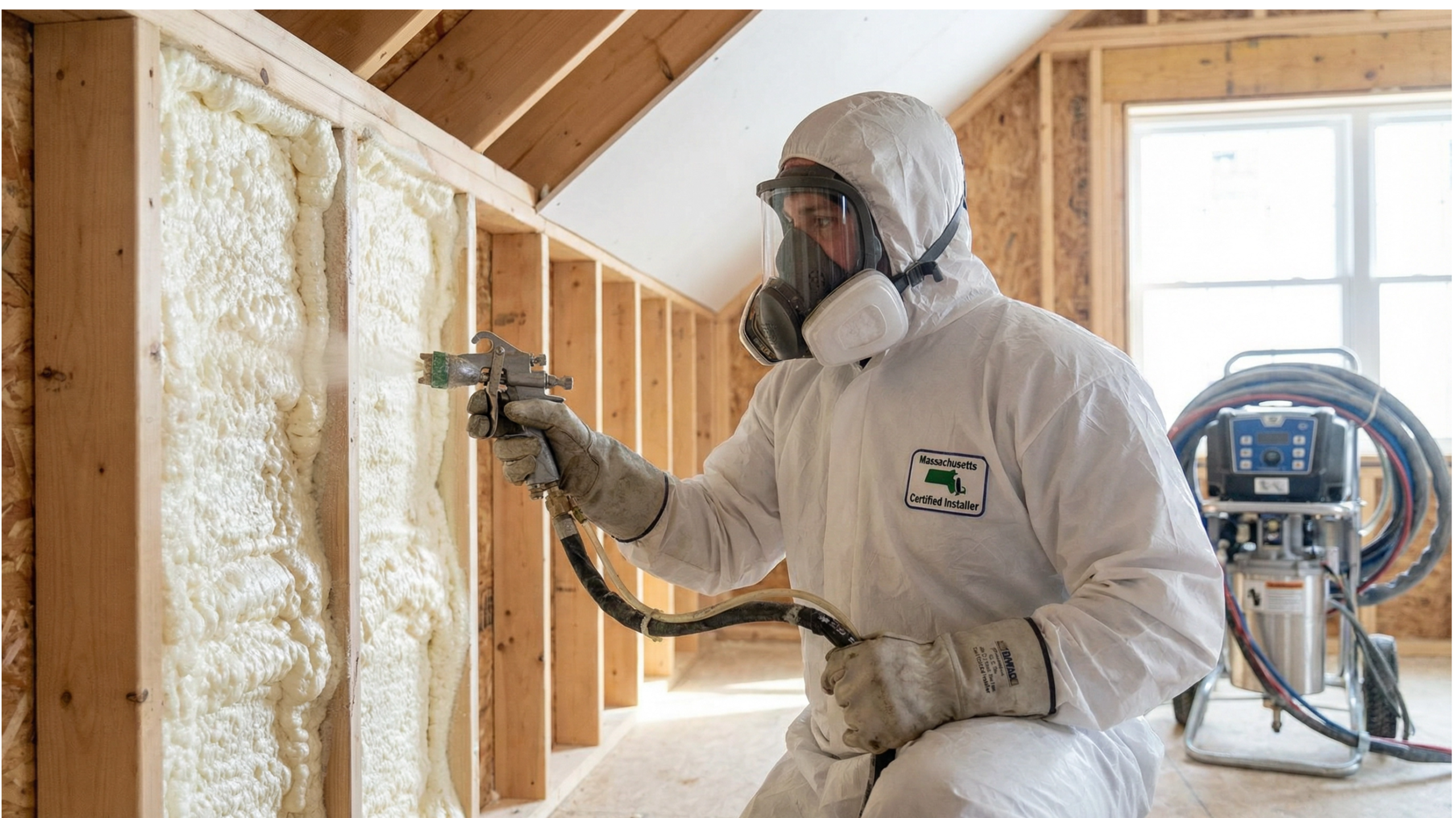
- Application: Certified installers in full protective gear apply the spray foam to the underside of the roof deck.
- Cleanup: All protective materials are removed, and the area is left clean.
Protect Your Home from the Top Down
An unvented attic insulated with closed-cell spray foam is a fundamental transformation of your home’s performance. It means no more ice dams, significantly lower energy bills, a more comfortable and consistent indoor environment, and a healthier home protected from moisture and mold.
Stop worrying every time it snows. Protect your home from the top down.