
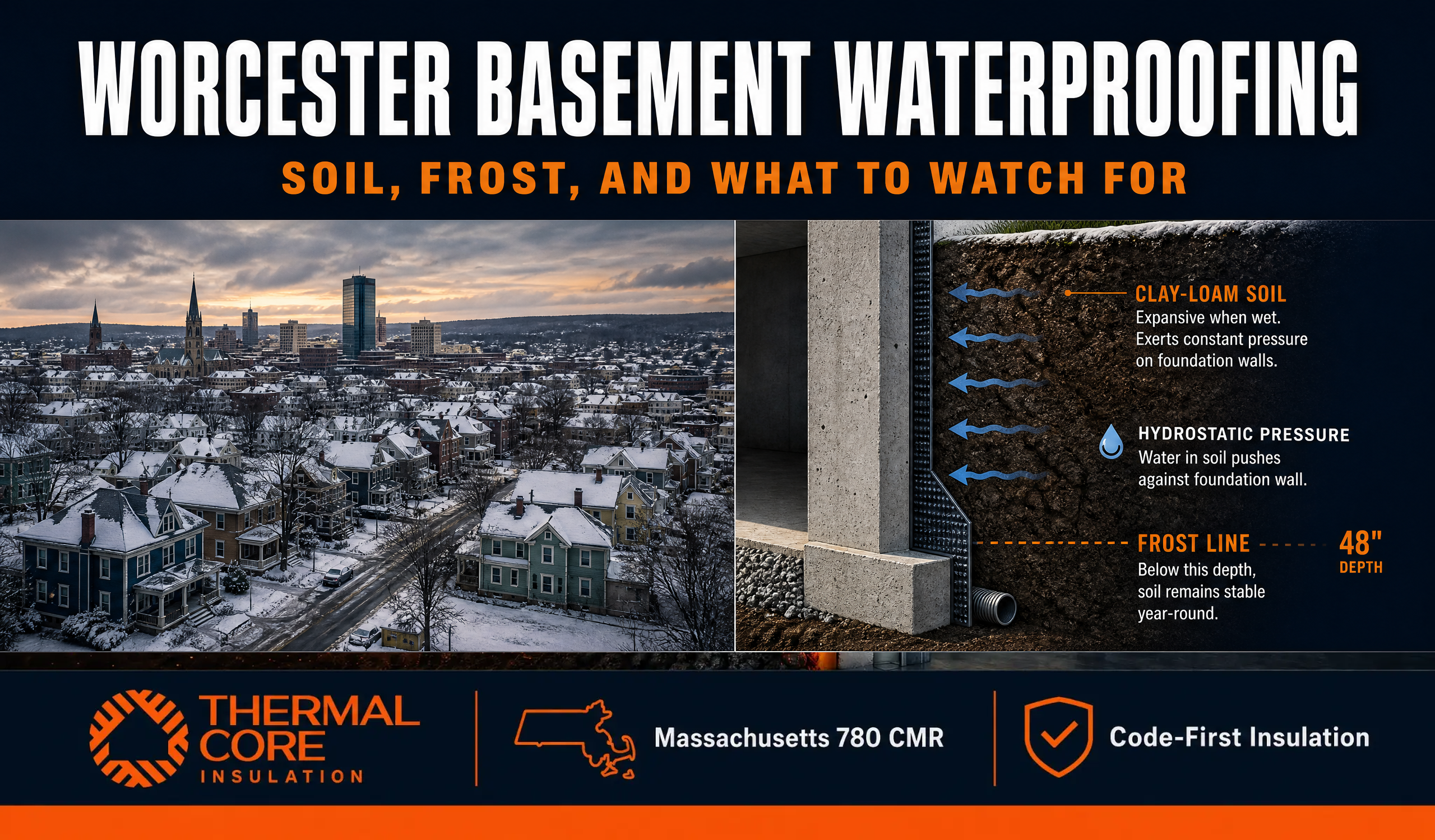
Worcester basement waterproofing is not the same as waterproofing a home on the coast or in the sandy soils of Cape Cod. Central Massachusetts presents a unique combination of geological and climatic challenges that put immense stress on residential foundations.
If you own a home in Worcester, you are dealing with dense clay-loam soils, a deep 48-inch frost line, and harsh New England freeze-thaw cycles. These factors combine to create significant hydrostatic pressure and frost heave risks that can compromise your foundation and ruin a finished basement if not addressed correctly.
At Thermalcore, we adhere to a Code-First Insulation philosophy. We frequently encounter Worcester homeowners who want to insulate their basements with closed-cell spray foam, only to discover active water intrusion during our inspection. Spray foam is an exceptional insulator, but it is not a substitute for structural waterproofing. Insulating over a wet wall will only trap moisture, leading to mold and expensive remediation.
Worcester Soil Problem: Clay-Loam and Glacial Till
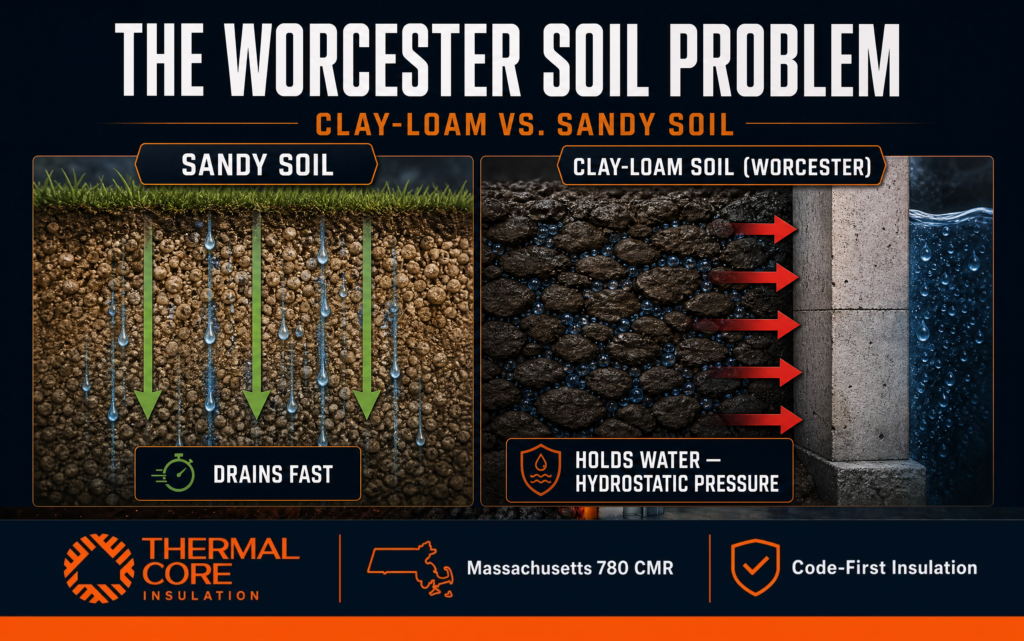
The soil surrounding your foundation dictates how water behaves around your home. Worcester sits on glacial till deposits, and the dominant soil type is clay-loam.
Clay-loam soils are expansive. When it rains, or when the spring snowmelt occurs, clay soil absorbs water and swells. Because clay drains poorly, this water is held directly against your foundation walls, creating massive hydrostatic pressure. This pressure forces water through the path of least resistance, often the cove joint (where the wall meets the floor), porous concrete blocks, or micro-cracks in poured concrete.
When the soil dries out in the summer, the clay shrinks, pulling away from the foundation. This constant swelling and shrinking cycle stresses the concrete and creates new pathways for water intrusion. Managing this water properly is a critical factor when calculating overall basement waterproofing cost.
| Soil Type | Drainage | Moisture Retention | Frost Susceptibility |
| Sandy Soil | Excellent | Low | Low |
| Loam | Moderate | Medium | Moderate |
| Clay-Loam (Worcester) | Poor | High | High |
The 48-Inch Frost Line and Frost Heave
Worcester’s inland location means it does not benefit from the moderating temperature effects of the ocean. Winters are harsh, and frost penetration is deep.
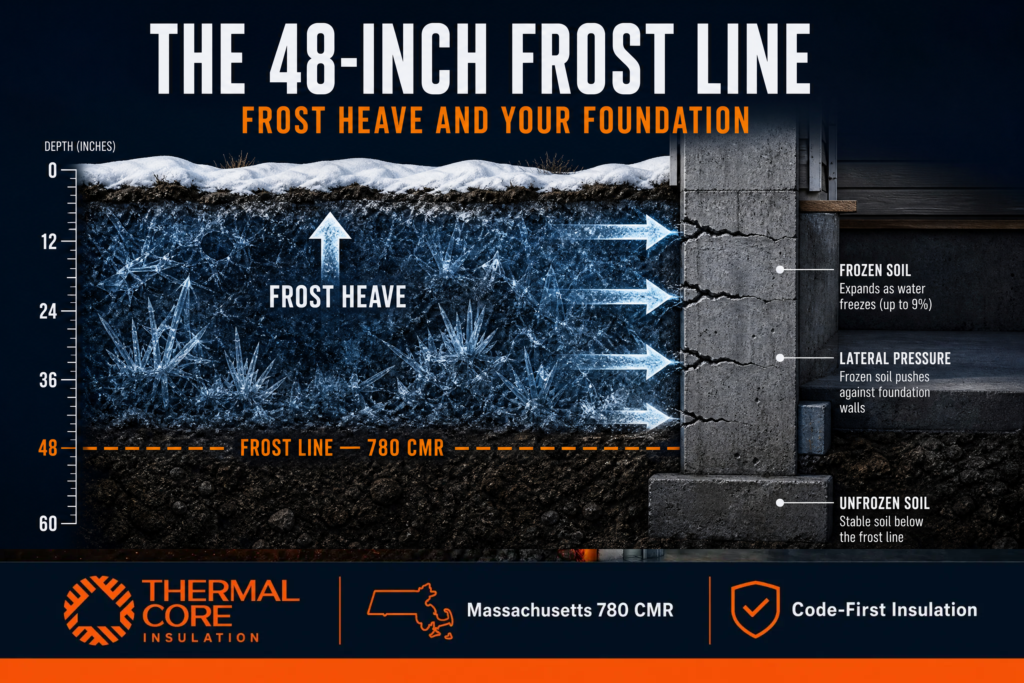
The Massachusetts State Building Code (780 CMR) establishes the minimum frost line in Worcester at 48 inches (4 feet). This means the ground can freeze solid up to four feet below the surface.
When the moisture trapped in Worcester’s clay-loam soil freezes, it expands. This expansion causes frost heave. Frost heave exerts thousands of pounds of lateral pressure against your foundation walls and vertical pressure under shallow footings, similar to how freezing soil damages foundations throughout New England. Over time, this repeated freeze-thaw cycle can cause horizontal cracking, bowing walls, and structural failure.
If your basement walls are cracked from frost heave, water will find its way in during the spring thaw. Waterproofing is required to manage this intrusion, and structural repairs may be necessary before any insulation can be safely applied.
Signs Your Worcester Basement Needs Waterproofing
Before you consider finishing your basement or adding spray foam insulation, you must inspect for signs of active water intrusion.
The most common signs in Worcester basements include:
- Efflorescence: This white, chalky powder on your concrete walls is often mistaken for mold. It is actually mineral salt left behind when water seeps through the concrete and evaporates on the interior surface. Efflorescence is definitive proof of active water migration.
- Horizontal Cracks: While vertical cracks are often related to normal settling, horizontal cracks are a serious warning sign. They indicate that the lateral pressure from freezing, saturated soil is pushing your foundation wall inward.
- Cove Joint Seepage: If water pools at the edges of your basement floor after heavy rain, it is likely entering through the cove joint. This occurs when hydrostatic pressure forces water up from beneath the slab.
- Musty Odors: Chronic moisture in the basement creates the perfect environment for mold and mildew. If your basement smells musty, you have a moisture problem that needs to be addressed before considering any spray foam fire safety insulation.
Danger of Insulating a Wet Basement
We cannot overstate this: you must never insulate a basement that has an active water problem.
If you apply closed-cell spray foam over a leaking foundation wall, the foam will stop the water from entering the living space, but it will trap that moisture inside the concrete. The hydrostatic pressure will continue to build behind the foam, potentially accelerating structural damage. Furthermore, any organic material (like wood framing) in contact with that trapped moisture will rot. This is why many homeowners ask, “is spray foam insulation a fire hazard” when applied incorrectly.
This is why Thermalcore’s Thermalcore Fire-Safe Envelope system begins with a thorough inspection. If we find efflorescence, active leaks, or significant cracking, we will halt the insulation project and require that the basement be properly waterproofed first. Proper installation is essential for everything from single-family homes to fire-rated insulation in MA multi-family buildings.
The Correct Sequence for Basement Finishing
If you are planning a basement renovation in Worcester, follow this sequence to protect your investment:
- Diagnose: Determine if moisture is coming from condensation or active water intrusion.
- Waterproof: Install a perimeter drain, sump pump, or exterior waterproofing membrane to manage hydrostatic pressure.
- Insulate: Once the basement is dry, apply closed-cell spray foam to provide a continuous thermal and vapor barrier. This step is crucial if you want to lower your MA summer electric bill and reduce the embodied carbon in insulation materials.
- Finish: Frame and finish the interior walls. Proper sealing here is just as important as commercial buildings air sealing.

By understanding the specific challenges of Worcester’s soil and climate, you can make informed decisions about protecting your home. Do it right the first time, and you will enjoy a dry, comfortable, and energy-efficient basement for decades.
If you are unsure whether your basement is ready for insulation, contact us for a professional assessment. We will help you navigate the process and ensure your home is protected with our Dual-Defense Intumescent Shield.