
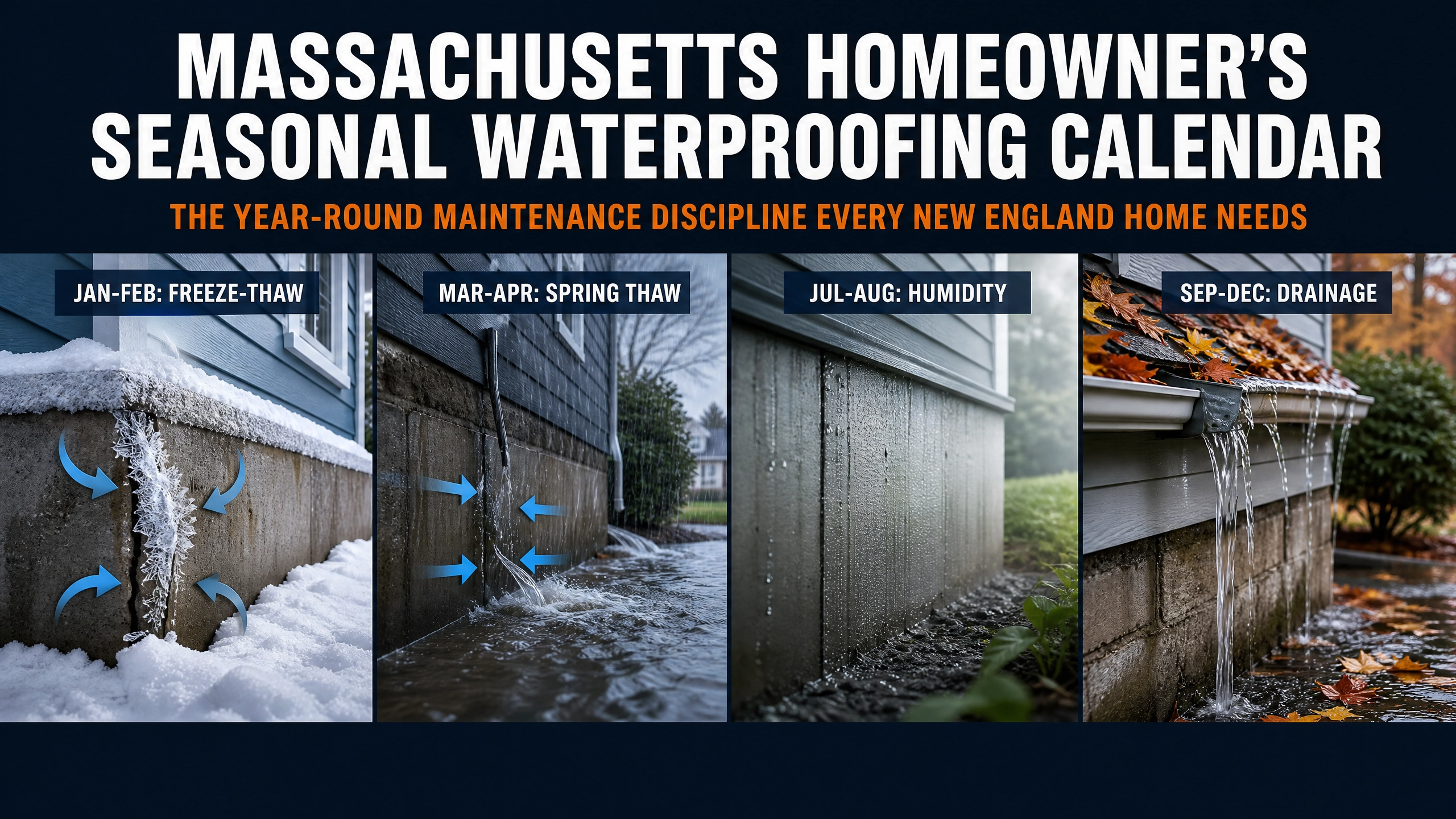
Basement waterproofing in Massachusetts requires year-round attention due to extreme seasonal weather shifts. The Massachusetts homeowner’s seasonal waterproofing calendar is dictated by one of the most volatile and demanding climates in the country.
In Winter (Jan-Feb), monitor for freeze-thaw foundation cracking and ice dam leaks. In Spring (Mar-Apr), prepare for rapid snowmelt and high water tables by testing sump pumps and clearing gutters. In Summer (May-Aug), manage high basement humidity by setting dehumidifiers to 45-50% RH to prevent mold. In Autumn (Sep-Dec), clear falling leaves from drainage systems before heavy seasonal rains. True waterproofing is an ongoing maintenance discipline, not a one-time project.
Many homeowners treat basement waterproofing as a reactive emergency. They wait until the spring thaw floods the basement, or until a musty smell permeates the house in July, before calling a contractor. By then, the damage to drywall, framing, and insulation is already done.
At Thermalcore, our building science experts view waterproofing differently. True moisture control is not a one-time project; it is an ongoing, proactive maintenance discipline. The dense clay soils, 48-inch frost lines, and heavy coastal precipitation of New England mean your foundation is under constant attack from different forces depending on the month.
To protect your home’s structural integrity and ensure your insulation performs at its peak, you must anticipate the weather. This comprehensive month-by-month guide will help you stay ahead of the hydrostatic pressure, freeze-thaw cycles, and vapor diffusion that threaten Massachusetts basements year-round.
January – February
Winter in Massachusetts is not just about cold; it is about the constant fluctuation between freezing and thawing.
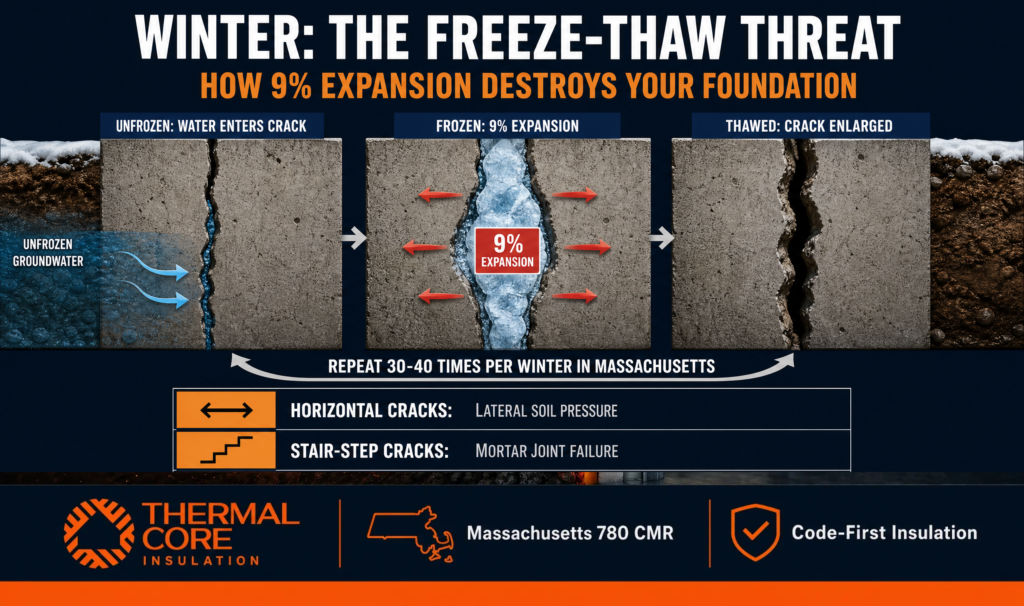
When groundwater around your foundation freezes, it expands by approximately 9%. As Mid-State Basement Systems explains, this expansion creates immense lateral pressure against concrete walls, causing them to crack, lean, or bow . When the temperature briefly rises above freezing, the ice melts, and liquid water seeps deeper into those newly formed micro-cracks. When the temperature drops again, the water refreezes and expands, widening the cracks further.
This freeze-thaw cycle is the primary driver of structural foundation damage in New England.
Winter Maintenance Tasks:
- Inspect Foundation Walls: Check the interior of your unfinished basement for new horizontal or stair-step cracks. These indicate lateral pressure from freezing soil.
- Monitor for Ice Dams: Ice dams form when heat escapes through an under-insulated roof, melting snow that then refreezes at the cold eaves. As Golden Group Roofing notes, water backing up behind an ice dam can run down the interior of your walls and pool in the basement. Proper commercial buildings air sealing and attic insulation are the permanent cures for ice dams.
- Keep Discharge Lines Clear: Ensure your sump pump discharge pipe is not buried under snow or frozen solid. A frozen discharge line will cause the pump to burn out and the basement to flood during a winter melt.
March – April
Spring is the most dangerous season for Massachusetts basements. As the deep snowpack melts and mixes with heavy spring rain, millions of gallons of water are introduced into the soil.
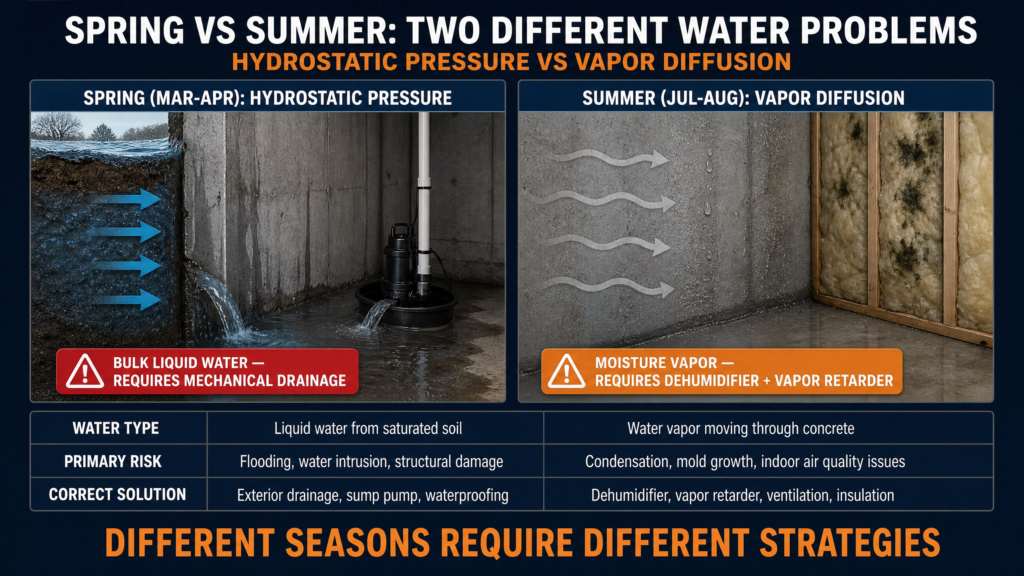
Because the ground beneath the surface is often still frozen, the water cannot absorb deeply. Instead, it flows horizontally, creating massive hydrostatic pressure against your foundation. According to LeBlanc Basement Waterproofing, March snowmelt can rapidly lead to basement flooding, especially when frozen ground forces runoff toward foundations.
Spring Maintenance Tasks:
- Test the Sump Pump: Before the major thaw begins, pour a five-gallon bucket of water into your sump pit to ensure the float switch activates and the pump discharges water quickly.
- Check the Battery Backup: Spring storms often bring power outages. If your primary sump pump fails during a storm, a battery backup system is the only thing standing between you and a flooded basement.
- Clear Gutters and Downspouts: Winter storms fill gutters with debris. Ensure downspouts are securely attached and discharging water at least six to ten feet away from the foundation.
May – June
By late May, the immediate threat of bulk water flooding usually subsides, but the water table remains high. This is the ideal time to assess how your foundation handled the spring stress test and make permanent repairs.
If you noticed weeping walls, damp concrete, or actual puddles during April, now is the time to install an interior perimeter French drain. Attempting to finish a basement or install insulation before addressing these leaks will result in ruined materials and high basement waterproofing costs later.
Early Summer Maintenance Tasks:
- Look for Efflorescence: Check your concrete walls for a white, chalky powder. This is efflorescence—mineral salts left behind when water wicks through the concrete and evaporates. It is a definitive sign of moisture intrusion.
- Grade the Landscape: Ensure the soil around your home slopes away from the foundation. The general rule is a drop of six inches over the first ten feet.
- Schedule Professional Waterproofing: If you need a French drain or vapor barrier installed, book your contractor now before the busy late-summer renovation season begins.
July – August
Summer in Massachusetts brings a different kind of moisture problem: high humidity and vapor diffusion.
Even if your basement never sees a drop of liquid water, the humid summer air combined with moisture vapor wicking through the porous concrete walls can create a damp, musty environment. When warm, humid air comes into contact with the cool concrete foundation walls, condensation forms.
This condensation soaks into fiberglass insulation, drywall, and cardboard boxes, providing the perfect environment for mold.
Summer Maintenance Tasks:
- Run a High-Capacity Dehumidifier: A standard residential dehumidifier is rarely enough for a Massachusetts basement. As Argendon’s basement humidity guide recommends, you should run a high-capacity unit set between 45% and 50% relative humidity (RH) to prevent mold growth .
- Do Not Open Basement Windows: It is a common myth that opening basement windows on a hot summer day will “air out” the space. In reality, you are letting heavy, humid air into a cool space, which will immediately cause massive condensation. Keep the windows closed and let the dehumidifier do the work.
- Consider Closed-Cell Foam: If you are insulating, closed-cell spray foam acts as a Class II vapor retarder, preventing humid summer air from reaching the cool concrete.
September – October
Autumn in New England is beautiful, but it also brings the remnants of coastal storms and heavy, sustained rainfall. Massachusetts receives about 43 inches of precipitation annually, spread fairly evenly throughout the year, meaning the fall can be just as wet as the spring.
The biggest threat in autumn is falling leaves. A single weekend of heavy leaf drop can completely clog your gutters, causing rainwater to spill directly over the edge and pool against your foundation.
Autumn Maintenance Tasks:
- Clean Gutters Relentlessly: You may need to clean your gutters three or four times during the autumn leaf drop. Consider installing high-quality gutter guards.
- Inspect Exterior Drains: If you have exterior French drains or catch basins in your yard or driveway, clear them of leaves and pine needles so they can handle heavy autumn downpours.
- Check Window Wells: Clear leaves and debris out of basement window wells to prevent water from pooling and leaking through the window frames.
November – December
As the year closes, the focus shifts back to preventing freezing damage. The goal is to get water as far away from the house as possible before the ground freezes solid.
Early Winter Maintenance Tasks:
- Disconnect Exterior Hoses: Remove all garden hoses from exterior spigots. A frozen hose can cause the pipe inside the wall to burst, flooding your basement from the inside.
- Extend Downspouts: Ensure all downspout extensions are firmly attached and directing water well away from the frost zone near the foundation.
- Seal Rim Joists: The area where your house framing meets the concrete foundation (the rim joist) is highly susceptible to air leaks. Having Thermalcore apply closed-cell spray foam to the rim joist stops cold air infiltration and prevents condensation during the winter, which lowers your MA summer electric bill and winter heating costs.

The Seasonal Waterproofing Summary
| Season | Primary Threat | Key Maintenance Task |
| Winter (Jan-Feb) | Freeze-thaw expansion, ice dams | Inspect for new foundation cracks; keep pump discharge clear. |
| Spring (Mar-Apr) | Rapid snowmelt, high water table | Test sump pump and battery backup; clear downspouts. |
| Summer (May-Aug) | High humidity, vapor diffusion, condensation | Run dehumidifier at 45-50% RH; keep windows closed. |
| Autumn (Sep-Dec) | Heavy rain, clogged drainage | Clean gutters repeatedly; clear window wells of leaves. |
The Code-First Approach to Year-Round Protection
At Thermalcore, we know that insulation is only as good as the waterproofing behind it. Whether you are dealing with a historic fieldstone foundation in Boston or a modern poured concrete basement in Worcester, you cannot fight the Massachusetts climate; you have to manage it.
Our Code-First Insulation philosophy ensures that we evaluate the seasonal moisture dynamics of your home before we apply our Thermalcore Fire-Safe Envelope. We refuse to trap hydrostatic pressure behind insulation, and we always ensure that vapor diffusion is properly managed.
If you are tired of reacting to seasonal basement issues and want a permanent, building-science-driven solution, contact the experts at Thermalcore today. Let us help you break the cycle of seasonal water damage.