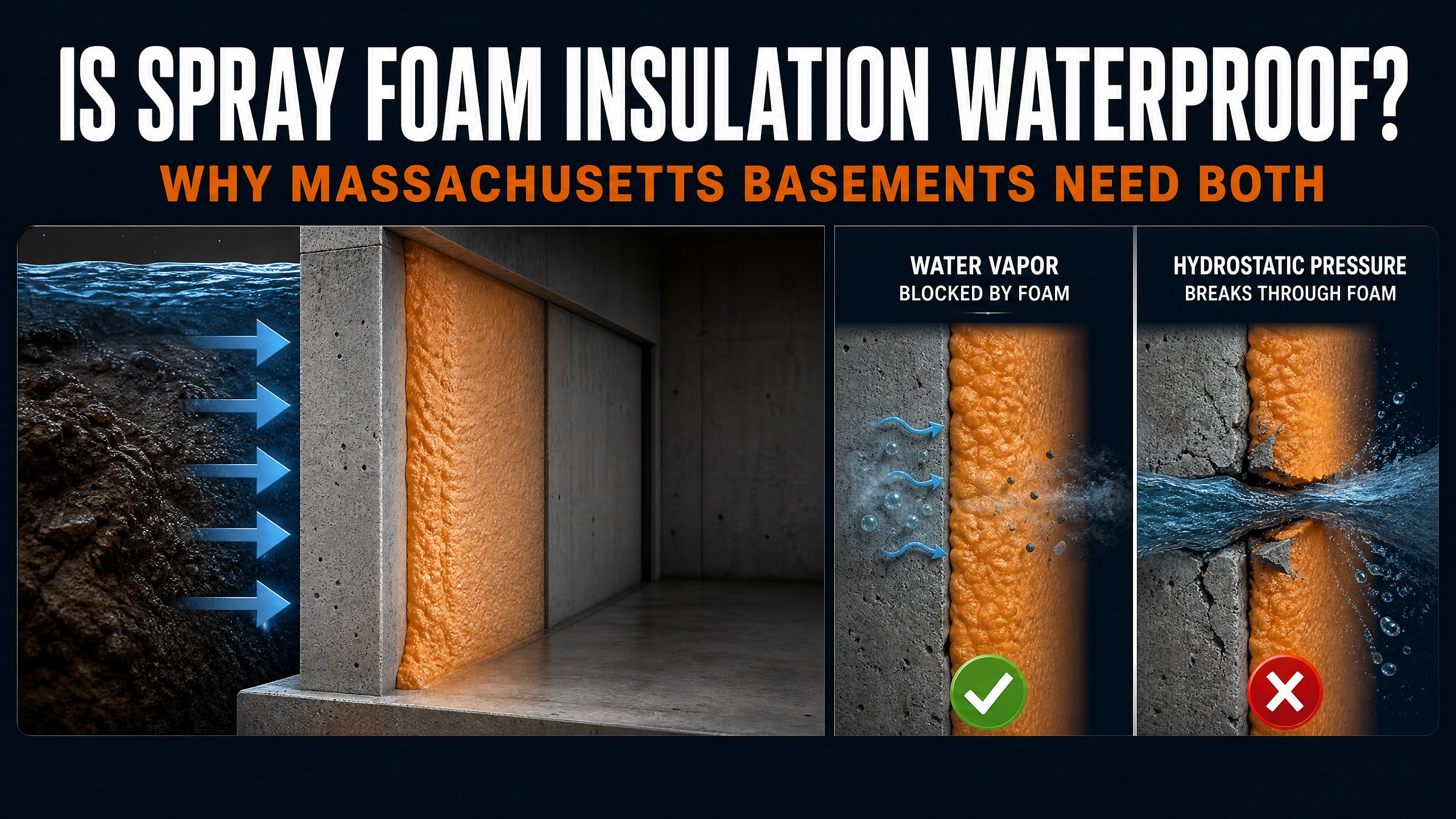
Is spray foam insulation waterproof? It is the most common question we receive from Massachusetts homeowners planning a basement renovation. The short answer is that closed-cell spray foam is highly water-resistant and water-impermeable, but it is not a structural waterproofing system.
When spring showers and melting snow cause groundwater to seep into basements, many homeowners search for a quick fix. They see the impressive moisture-blocking properties of spray foam and assume it can solve their leak. However, applying insulation over an active foundation leak is a critical building science error that can lead to severe structural damage and mold.
At Thermalcore, our Code-First Insulation philosophy dictates that we manage the water before we build the thermal envelope. Closed-cell spray foam is the best insulation material available for below-grade applications, but it is designed to complement a proper waterproofing system, not replace it.
Physics of Spray Foam: Open-Cell vs. Closed-Cell
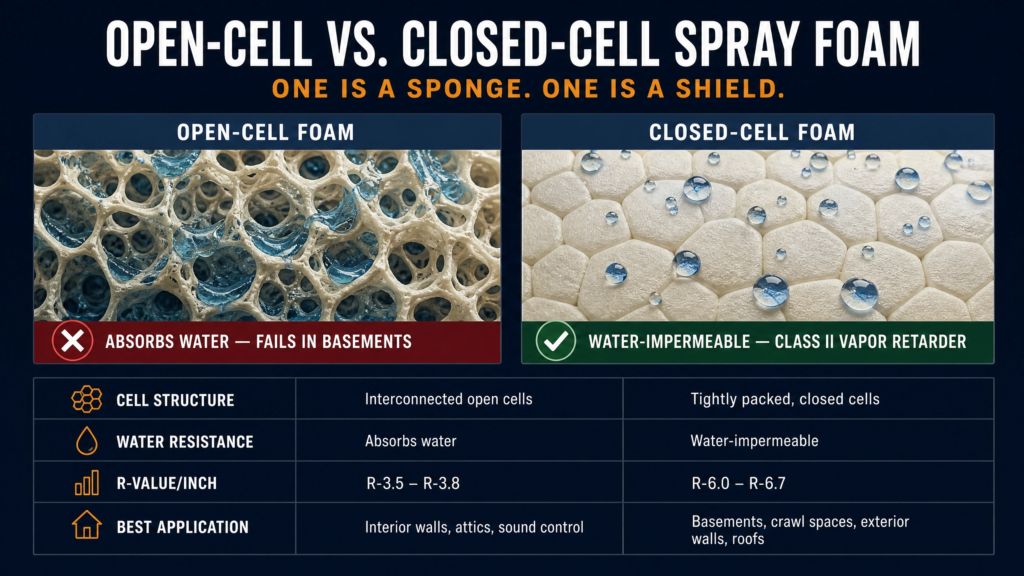
To understand how spray foam interacts with water, you must first understand the difference between the two primary types of spray polyurethane foam (SPF ). According to Building Science Corporation, closed-cell SPF is one of the most effective materials available for below-grade thermal and moisture control, but only when used correctly.
Open-Cell Spray Foam has an interconnected, sponge-like cellular structure. It is lightweight, cost-effective, and provides excellent sound dampening. However, because the cells are open, it readily absorbs and holds liquid water. If open-cell foam gets wet, it loses its insulating value (R-value) and becomes a breeding ground for mold. As RetroFoam explains, open-cell foam should never be used in a damp Massachusetts basement.
Closed-Cell Spray Foam features a dense, compact structure where the microscopic cells are completely sealed off from one another. Because the cells are closed, the foam is highly resistant to water absorption and vapor transmission. It provides roughly R-6 to R-7 per inch of thickness and acts as a Class II vapor retarder, meaning moisture vapor from the soil cannot pass through it.
| Feature | Open-Cell Spray Foam | Closed-Cell Spray Foam |
| Cell Structure | Interconnected (Sponge-like) | Sealed and densely packed |
| Water Resistance | Poor (Absorbs water) | Excellent (Water-impermeable) |
| Vapor Retarder | No (Highly permeable) | Yes (Class II Vapor Retarder) |
| Best Application | Above-grade interior walls | Basements, crawl spaces, exterior walls |
Because closed-cell foam is water-impermeable, it is often marketed as “waterproof.” While it will not absorb water like fiberglass or open-cell foam, using it to stop an active foundation leak is a dangerous misuse of the product.
The Danger of Insulating Over a Leak
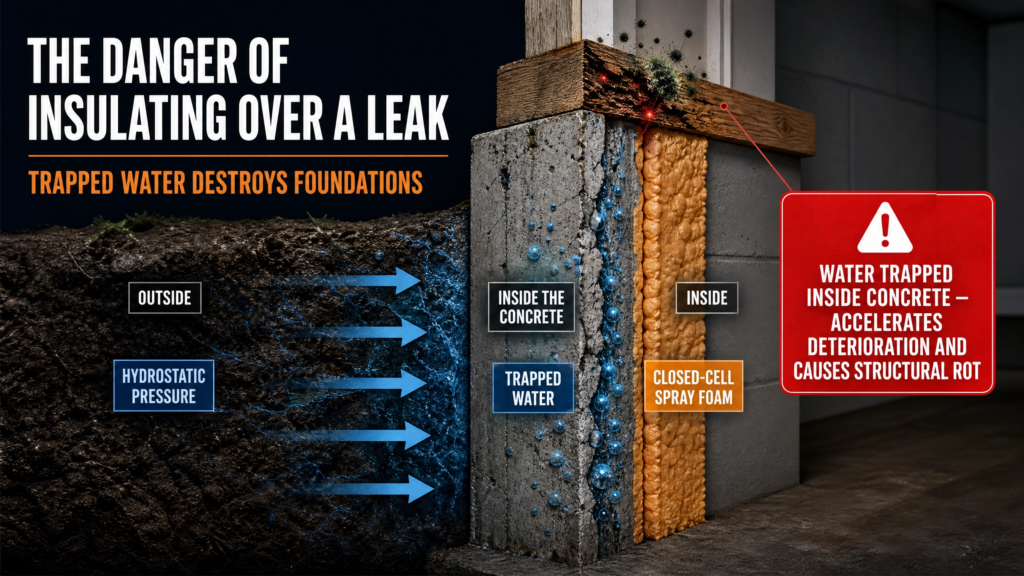
If you have a crack in your foundation or a failing cove joint, groundwater is entering your basement under hydrostatic pressure.
If you apply closed-cell spray foam directly over that leak, the foam will successfully stop the water from entering your finished living space. The wall will look dry from the inside. However, the water has not disappeared. It is now trapped inside the porous concrete foundation wall, pinned between the thousands of pounds of hydrostatic pressure outside and the impenetrable spray foam inside.
Over time, this trapped moisture causes several severe problems:
- Concrete Deterioration: The trapped water accelerates the breakdown of the concrete, especially during freeze-thaw cycles.
- Hidden Mold: Moisture can migrate upward through the concrete until it reaches the untreated wood sill plate, causing massive rot and mold growth.
- Undetected Failure: Because the foam hides the leak, the structural damage can progress for years before it is discovered.
This is why Thermalcore inspectors rigorously check for efflorescence (white mineral salts) and moisture before applying our Thermalcore Fire-Safe Envelope. If we detect an active leak, we require the homeowner to address the waterproofing first.
Waterproofing + Spray Foam
Massachusetts basements face unique challenges. Our dense clay-loam soils hold water tightly against foundations, and our 48-inch frost line causes severe freeze-thaw cracking. This creates massive hydrostatic pressure that must be managed mechanically.
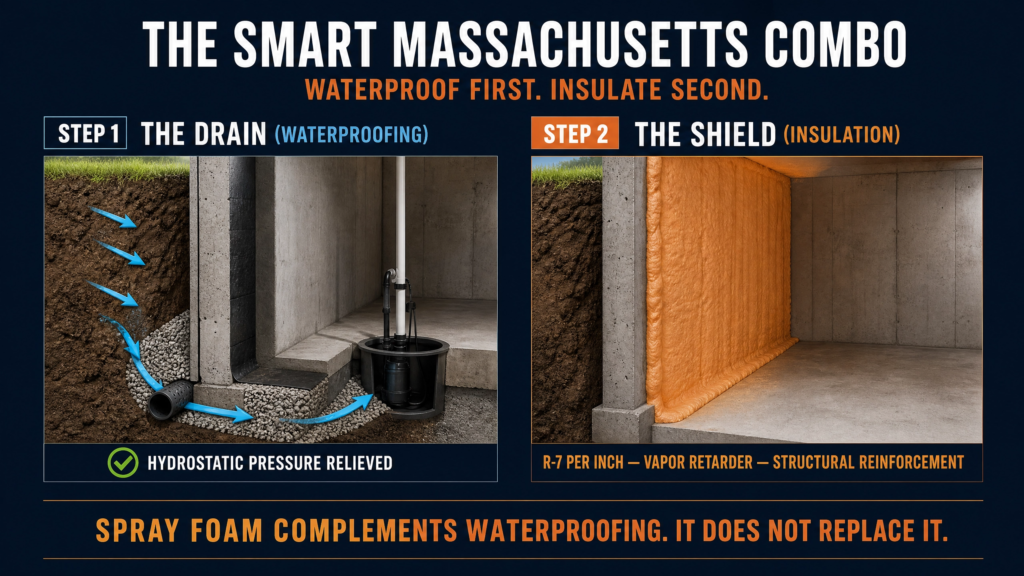
The most effective, long-term solution for a Massachusetts basement is a two-part system:
Step 1: Manage the Water (Waterproofing)
If your basement experiences active seepage, you must relieve the hydrostatic pressure. This is typically achieved by installing an interior perimeter drain (French drain) and a sump pump system. This system captures the groundwater as it enters the foundation and pumps it safely away from the house. This satisfies the strict Massachusetts building codes waterproofing requirements.
Step 2: Build the Envelope (Insulation)
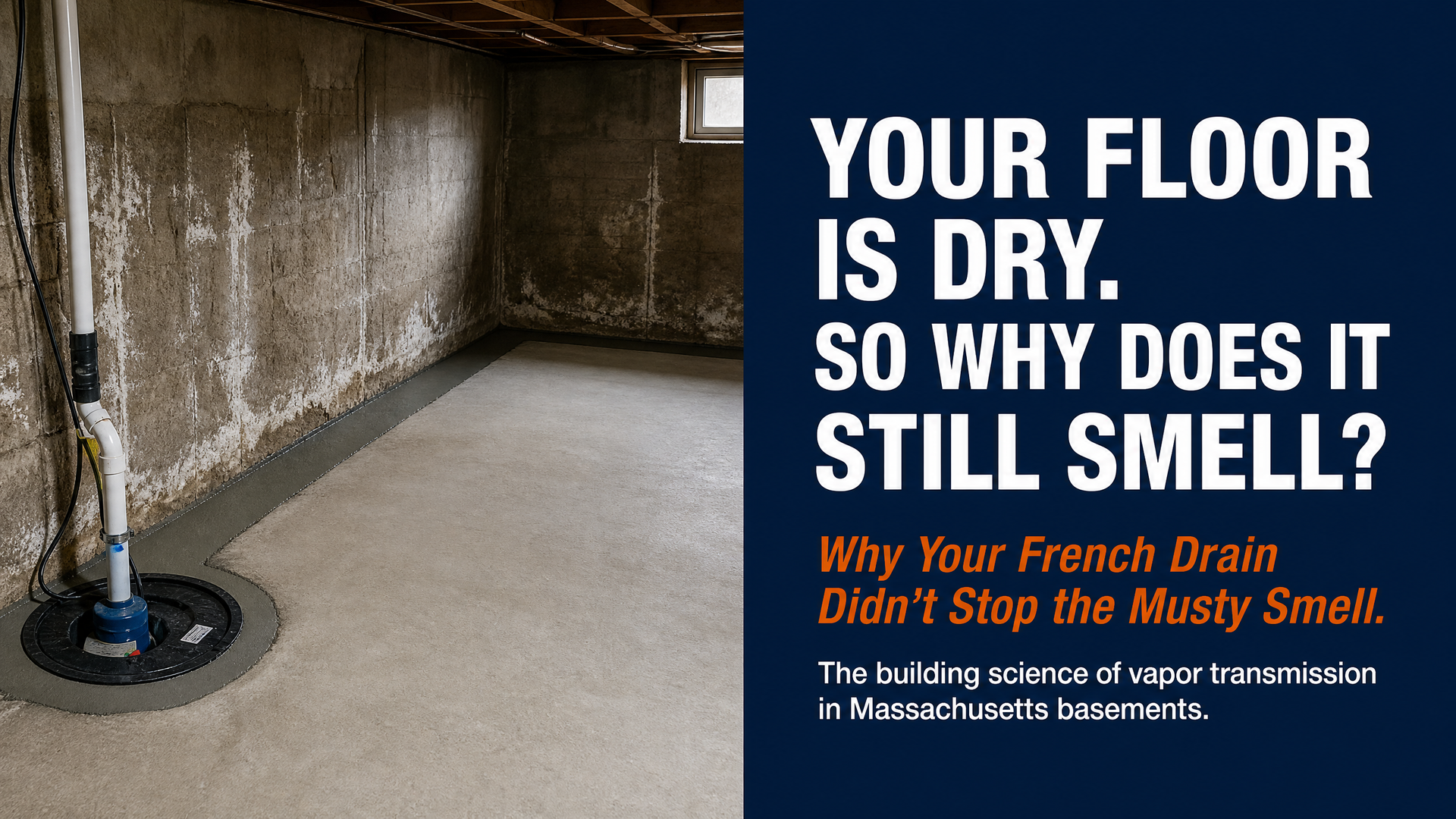
Once the water is mechanically managed and the wall is dry, you can apply closed-cell spray foam. Now, the foam can perform exactly as engineered. It adheres directly to the concrete, providing structural reinforcement, an unbroken thermal barrier, and a vapor retarder that stops damp soil smells from entering the basement.
By combining proper waterproofing with our Dual-Defense Intumescent Shield, you create a basement that is dry, warm, and structurally sound for the life of the home. This comprehensive approach is essential whether you are evaluating basement waterproofing cost for a single-family home or planning fire-rated insulation in MA multi-family buildings.
Stop the Water, Then Stop the Heat
Spray foam insulation is a remarkable building material. It can lower your MA summer electric bill and dramatically improve the comfort of your home. But it cannot defy physics.
If you are planning a basement renovation, do not use insulation as a bandage for a plumbing or foundation problem. Diagnose the leak, waterproof the foundation, and then insulate.
If you are unsure whether your basement is ready for insulation, or if you have questions like “is spray foam insulation a fire hazard“, contact the experts at Thermalcore. We will provide a thorough, code-compliant assessment to ensure your home is protected from both the cold and the damp.