

Effective Cambridge triple-decker insulation is the single most important investment for owners of these iconic buildings. They are the undisputed symbols of Cambridge real estate, but if you own or live in one, you know their shared, unspoken challenge: they are notoriously difficult to heat. The same design that makes them so efficient for housing three families also makes them incredibly inefficient from a thermal perspective. The drafts and cold floors are symptoms of a building structure designed long before energy efficiency was a consideration, making a proper Cambridge triple-decker insulation strategy essential.
For landlords, this means high utility costs or unhappy tenants. For owner-occupants, it means a constant battle with the thermostat. But it doesn’t have to be this way. This guide explains the unique challenges and outlines the most effective solutions for your Cambridge triple-decker insulation project.
But it doesn’t have to be this way. Modern insulation techniques can transform a drafty triple-decker into a comfortable, quiet, and energy-efficient building. This guide explains the unique challenges of insulating these iconic Cambridge homes and outlines the most effective solutions.
The #1 Problem: Balloon Framing Insulation
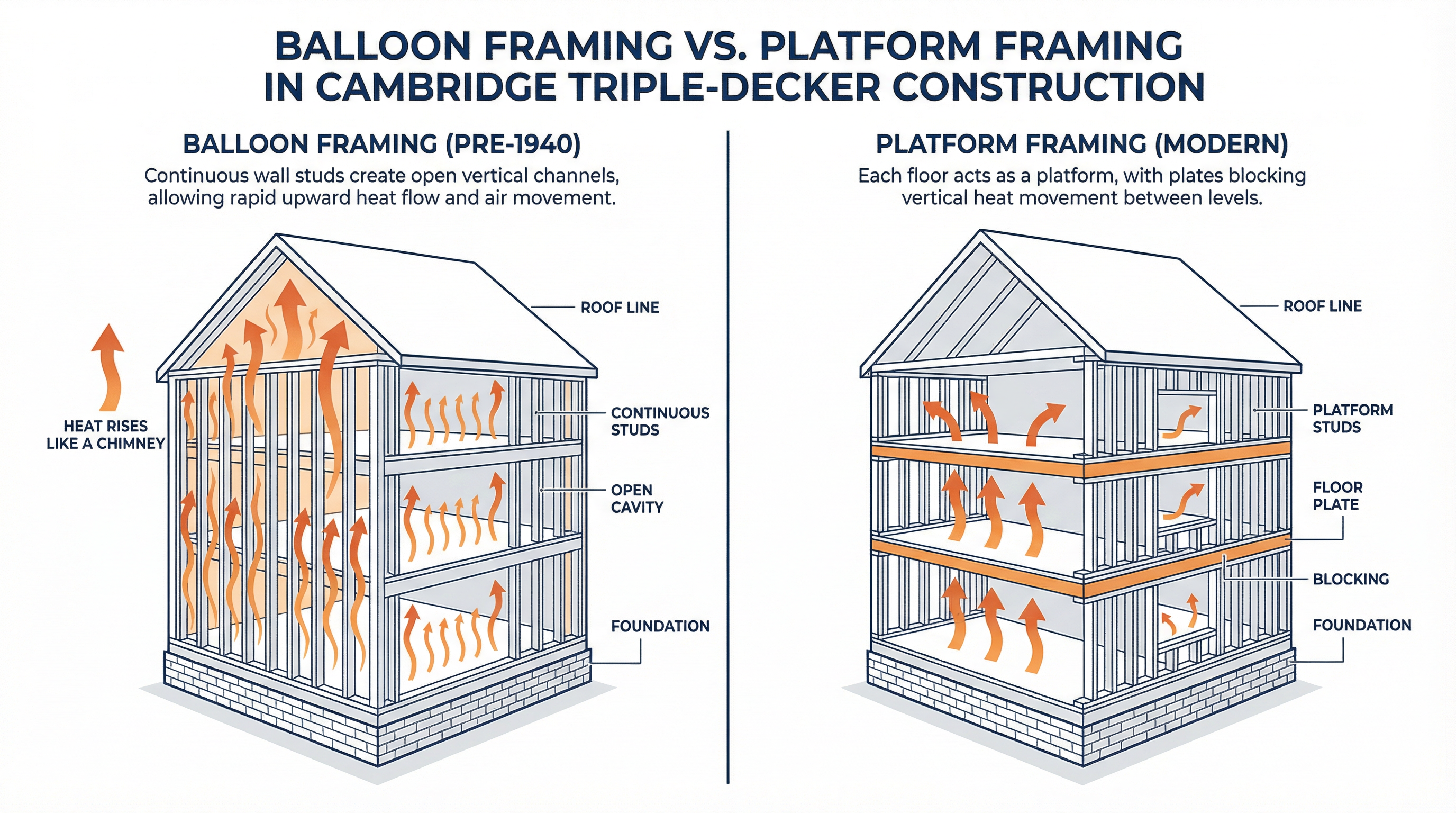
To understand why a Cambridge triple-decker insulation project is so critical, you have to understand balloon framing. The vast majority of these homes were built between the 1880s and 1930s using this technique, a common feature in old homes across Massachusetts.
In balloon framing, the exterior wall studs are continuous from the foundation to the roof. This created a fast way to build, but it also created a thermal nightmare.
- The Chimney Effect: The empty, uninsulated wall cavities in a balloon-framed triple-decker act like giant chimneys. Cold air gets pulled in at the basement level, rises through the walls as it’s heated by the building, and escapes into the attic. This constant convective loop is the primary reason why triple-deckers are so drafty and hard to heat.
The Solution: Dense-Packing the Walls
You cannot simply stuff fiberglass batts into these walls. The only effective way to stop the chimney effect is to completely fill the wall cavities with a dense insulation material. The best solution is dense-pack cellulose.
- How it works: A certified technician drills small, strategically placed holes in the exterior or interior walls and uses a specialized machine to blow cellulose insulation into the cavities at high pressure. The material becomes densely packed, stopping all air movement within the wall.
- Why it’s effective: It fills every nook and cranny and provides both thermal resistance (R-value) and a critical air barrier. It is also considered one of the healthiest insulation materials available.
How to insulate a Triple-Decker
Beyond the walls, there are several other areas that must be addressed in a comprehensive triple-decker insulation project.
| Challenge Area | Why It’s a Problem in Triple-Deckers | The Professional Solution |
| The Attic | A large, uninsulated attic acts as a giant escape hatch for heat rising from all three floors. | Air seal all penetrations (around pipes, wires, chimneys) with spray foam, then blow in 13-15 inches of cellulose to achieve an R-value of R-49. |
| The Rim Joists | The area where the wooden structure rests on the stone or brick foundation is a massive source of air leakage, making the first-floor unit cold. | Apply 2-3 inches of closed-cell spray foam directly to the rim joists in the basement. This provides a permanent, airtight seal. |
| The Basement | Old, uninsulated fieldstone or brick foundations are cold and damp, pulling heat from the first-floor unit and creating an uncomfortable living space. | Insulating the basement ceiling can help, but the best solution is to insulate the foundation walls with rigid foam or spray foam, creating a more conditioned, comfortable basement. |
The Benefits of Insulating Your Triple-Decker
A professional insulation project is one of the highest-return investments you can make in a triple-decker property.
For Landlords:
- Higher Tenant Retention: A comfortable, draft-free apartment with reasonable utility bills is a major selling point. Happy tenants stay longer, reducing turnover costs.
- Increased Property Value: An energy-efficient building is a more valuable asset. It’s a key feature that modern buyers and renters look for.
- Reduced Maintenance: By controlling air and moisture movement, you reduce the risk of long-term issues like ice dams and mold growth.
For Owner-Occupants:
- Immediate Comfort: The difference is noticeable overnight. The drafts are gone, the temperature is more stable, and the furnace runs less often.
- Lower Energy Bills: You’ll see a significant reduction in your monthly heating and cooling costs, often between 25-40%.
- Sound Dampening: Dense-pack cellulose has excellent acoustic properties, reducing noise transfer between apartments and from the street.
Leveraging Mass Save for Your Triple-Decker Insulation
Triple-deckers are a primary target for the Mass Save® program. Your building is eligible for the same incentives as a single-family home, including:
- Up to 75% off the cost of approved Cambridge triple-decker insulation work.
- No-cost air sealing for all units.
- A no-cost energy assessment for the entire building.
This means you can upgrade your entire property for a fraction of the retail cost. For a full breakdown of the 2026 Mass Save incentives, see our detailed guide.
The Bottom Line: A Smart Investment in a Cambridge Icon
Your triple-decker is more than just a building; it’s a piece of Cambridge history and a valuable asset. Investing in a professional insulation upgrade is the single most effective step you can take to protect that asset, improve its performance, and enhance the comfort of everyone who lives there.
It’s a project that pays for itself in energy savings, increased property value, and tenant satisfaction.
Own a triple-decker in Cambridge? Find out how much you can save with a professional insulation upgrade.
Request a no-cost energy assessment for your building from Thermalcore Insulation today. We specialize in the unique challenges of Cambridge’s multi-family homes.