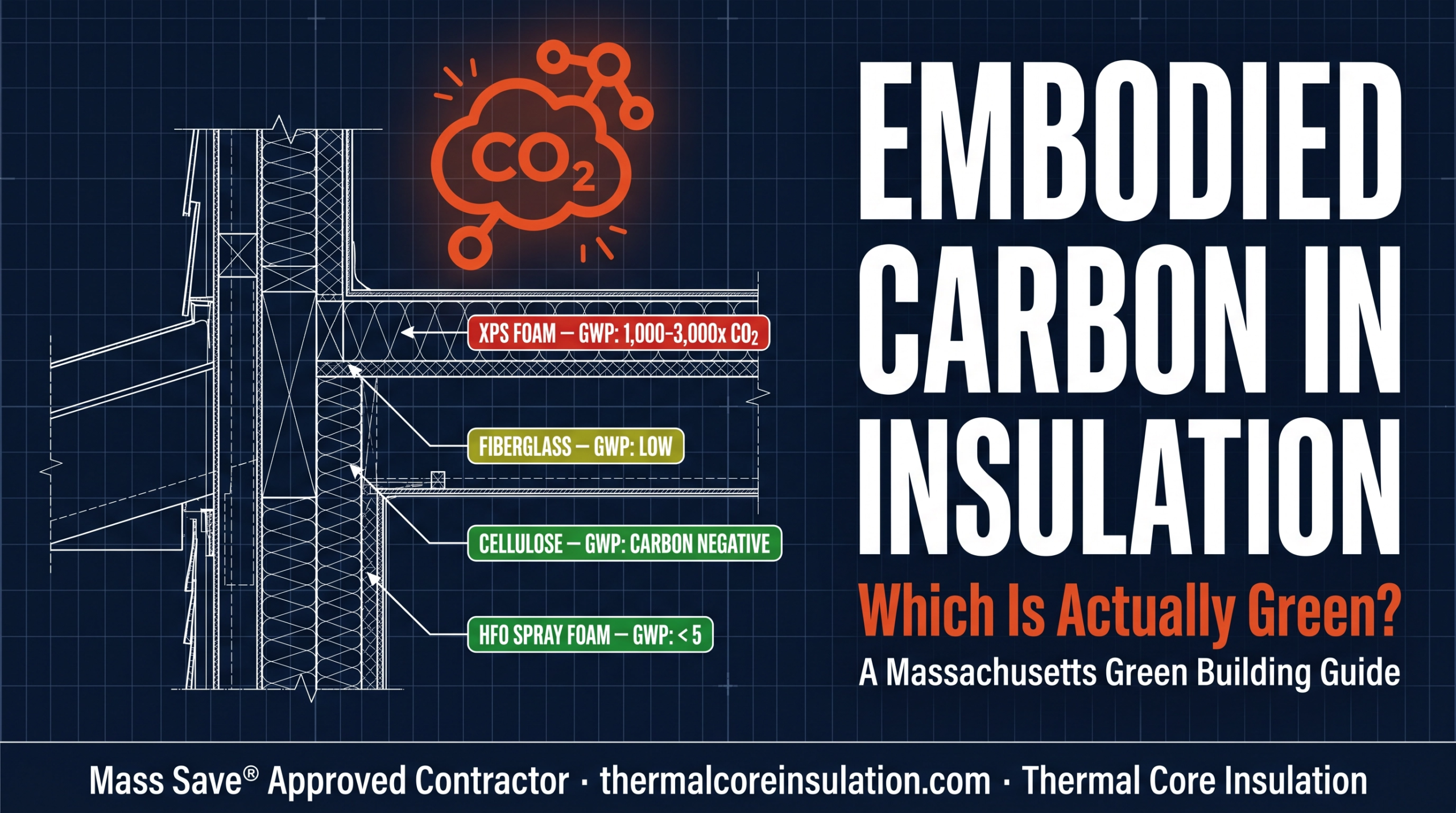

When discussing the future of the building science industry, the focus keyword on everyone’s mind is bio-based insulation 2026. For decades, the conversation around high-performance building envelopes focused almost exclusively on R-value, often relying on petroleum-based foams and energy-intensive mineral wools. However, as embodied carbon targets tighten and programs like Boston’s BERDO and the Massachusetts Stretch Code become more stringent, architects and builders are looking for new solutions. Enter the bio-based insulation 2026 market.
This is no longer a niche, experimental sector for off-grid cabins. The global bio-based insulation market is projected to grow at a compound annual growth rate of 4.4% through 2033. With major investments flowing into domestic manufacturing and new materials gaining code approval, bio-based insulation 2026 is officially entering the mainstream commercial and residential construction sectors in New England.
For developers, general contractors, and homeowners in Massachusetts, understanding these emerging materials is critical. Whether you are planning a commercial retrofit in Cambridge or building a custom passive house, the insulation you specify today will define your building’s performance, health, and carbon footprint for the next fifty years.
The Shift From R-Value to Embodied Carbon in Bio-Based Insulation
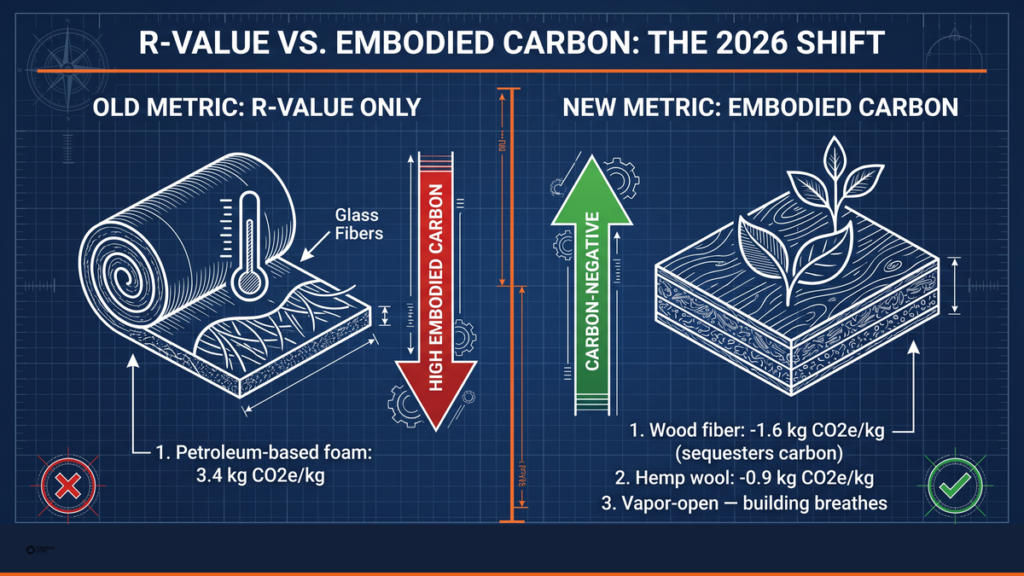
Historically, the primary metric for insulation was thermal resistance, or R-value. While stopping heat transfer remains the core function of any building envelope, the focus has broadened. Building science now recognizes that the energy required to manufacture an insulation product, its embodied carbon, can sometimes outweigh the operational energy it saves over its lifetime.
Bio-based insulation 2026 materials, derived from renewable agricultural or forestry byproducts, flip this equation. Many of these materials are carbon-negative, meaning they sequester more carbon during their growth phase than is emitted during their manufacturing process. Furthermore, unlike synthetic foams, bio-based materials are typically vapor-open. They allow the building envelope to manage moisture dynamically, which is crucial for preventing costly soffit insulation failures and structural rot in the humid Massachusetts climate.
Wood Fiber Insulation
The most significant development for the New England market regarding bio-based insulation in 2026 is the rapid scaling of domestic wood fiber insulation. Previously, builders who wanted to use high-performance wood fiber had to import it from Europe, adding high cost and carbon emissions through shipping.
That barrier has been eliminated. Companies like TimberHP, the first U.S.-based manufacturer of wood fiber insulation located in Maine, are utilizing residual softwood chips from local lumberyards to produce acoustic and thermal cavity insulation, dense pack, and continuous exterior boards.
Wood fiber insulation offers several distinct advantages for the Massachusetts market. It provides excellent thermal mass, slowing the transfer of heat during hot summer afternoons and directly addressing the summer stack effect that drives up cooling costs. It is vapor-open, allowing walls to dry out if moisture enters the cavity, reducing mold risk. It also meets ASTM E84 ratings for fire resistance without the use of toxic chemical fire retardants, making it an excellent option for multi-family fire-rated assemblies.
In 2026, we are seeing widespread adoption of wood fiber continuous insulation boards on exterior walls, replacing traditional rigid foam boards and significantly reducing the building’s overall carbon footprint.

Hempcrete and Hemp Wool
Hemp-based building materials have been utilized in Europe for decades, but regulatory hurdles previously stalled their adoption in the United States. That changed recently with the inclusion of hempcrete in the 2024 International Residential Code (IRC) Appendix BL, making it a major player in the bio-based insulation landscape in 2026.
Hempcrete is a bio-composite made from the woody core of the hemp plant (hurd) mixed with a lime-based binder. It is not a structural material; rather, it is cast around a timber frame to create a monolithic, vapor-permeable, and fire-resistant envelope. The largest hemp project in the United States, a 12-unit duplex development in Newburyport, MA, recently demonstrated that hempcrete can achieve exceptional Passive House-level airtightness while maintaining healthy indoor air quality.
For drop-in replacements, hemp wool batts are also gaining traction. Manufactured from hemp fibers, these batts offer R-values comparable to fiberglass or mineral wool but without the itchy installation process or the respiratory concerns. They are particularly effective at acoustic dampening, making them ideal for interior partition walls where homeowners often complain about hot and cold spots or noise transfer.

Mycelium
Perhaps the most fascinating material entering the commercial discussion for bio-based insulation in 2026 is mycelium insulation. Mycelium is the vegetative root structure of fungi. By feeding agricultural waste (like sawdust or hemp hurd) to specific fungal strains in molds, manufacturers can “grow” insulation panels. Once the mycelium fills the mold, it is heat-treated to stop growth, resulting in a lightweight, rigid board.
Recent studies indicate that mycelium insulation can achieve an R-value of up to R-9.4 per 50mm, making it highly competitive with traditional mineral wool. Furthermore, it offers exceptional acoustic absorption and inherent fire resistance.
While mycelium is still in the early stages of commercial scaling compared to wood fiber or hemp, it represents the ultimate closed-loop manufacturing process. It requires very little energy to produce, utilizes waste streams, and is 100% biodegradable at the end of its lifecycle. As architects look for innovative ways to meet strict Massachusetts commercial building standards, mycelium panels are moving from laboratory curiosities to specified materials.

What Bio-Based Insulation Means for Massachusetts Builders and Homeowners
The influx of bio-based insulation materials in 2026 does not mean that spray foam or fiberglass are obsolete. High-performance closed-cell spray foam remains the undisputed champion for creating an absolute air and vapor barrier in challenging spaces, such as unvented roof decks or rim joists. The key is specifying the right material for the right application.
If you are a homeowner looking to lower your MA summer electric bill by 30%, air sealing the attic floor and adding a thick layer of cellulose (which is itself a bio-based, recycled paper product) remains one of the most cost-effective strategies. If you are navigating the complexities of the Mass Save program, understanding which materials qualify for rebates is crucial.
However, if you are designing a new custom home or a commercial development, the envelope specification process has fundamentally changed. The question is no longer just “What is the R-value?” The questions for bio-based insulation 2026 are: What is the embodied carbon of this assembly? How does this material handle bulk moisture and vapor drive? What happens to this material at the end of the building’s life?

Alt text: Blueprint-style infographic showing three application scenarios for bio-based insulation 2026 in Massachusetts. Homeowner: air sealing + cellulose attic, result: -30% summer electric bill, Mass Save rebate eligible. Builder: wood fiber continuous insulation, result: vapor-open assembly, no trapped moisture, 5-star reviews. Developer: hempcrete + spray foam hybrid, result: BERDO compliant, carbon-negative, NOI optimized. Three decision questions for 2026. Thermalcore Insulation.

Partnering for the Future
At Thermalcore Insulation, we are not just installers; we are building science practitioners. We constantly monitor the evolving landscape of materials, from the latest summer spray foam curing protocols to the integration of carbon-negative wood fiber boards.
The future of insulation is bio-based, vapor-open, and carbon-negative. If you are an architect, builder, or homeowner in Massachusetts looking to engineer a building envelope that meets the standards of bio-based insulation 2026 and beyond, you need a partner who understands the science behind the materials.
Contact Thermalcore Insulation today to discuss the optimal insulation strategy for your next project. Let’s build envelopes that perform for you and for the environment.