If you live in Massachusetts and you’re researching insulation cost, you’ve probably noticed something frustrating. Every website gives you a different number. Some say $1,500 for an attic. Others say $6,000. The range is so wide it’s almost useless.
Here’s why that happens. Massachusetts insulation costs are roughly 30% higher than the national average, and most pricing guides don’t account for our climate. Boston winters demand higher R-values, stricter building codes, and more skilled labor than warmer regions. That drives up the price, but it also means better performance and lower energy bills.
This guide breaks down exactly what Massachusetts homeowners pay for insulation in 2026, including material costs, labor rates, and the hidden factors that affect your final bill.
Why Massachusetts Insulation Costs More Than Other States
Massachusetts homeowners pay more for insulation because the climate requires it. The state recommends R-49 to R-60 for attics, compared to R-38 in milder regions. That’s 30% more material right from the start.
Labor costs are also higher in the Boston metro area. Skilled insulation contractors charge $3 to $5 per square foot for installation, compared to $2 to $4 nationally. Massachusetts also enforces strict building codes and permitting requirements, which add time and cost to every project.
Finally, extreme winter conditions mean insulation needs to perform at a higher level. Air sealing matters more here than in temperate climates. Moisture control is critical. And installation quality can’t be compromised, because a poorly insulated home in Massachusetts means ice dams, drafts, and heating bills that spiral out of control.
Material Costs: Fiberglass, Cellulose, and Spray Foam
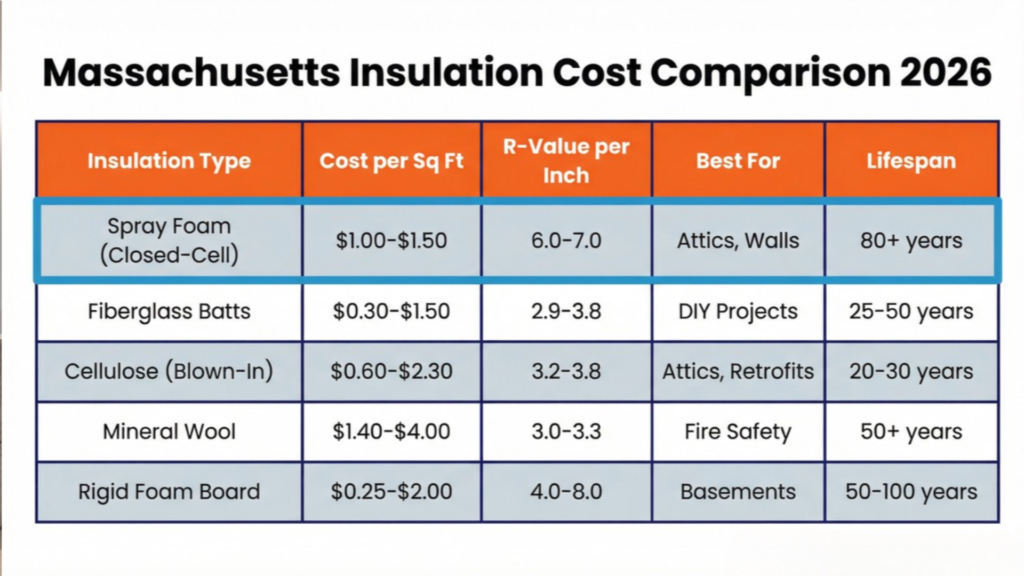
The type of insulation you choose has the biggest impact on cost. Here’s what each material costs per square foot in Massachusetts.
- Fiberglass batts are the most affordable option at $0.30 to $1.50 per square foot. They’re easy to install and widely available, which makes them popular for DIY projects and budget-conscious homeowners. However, fiberglass doesn’t stop air leaks, and it loses effectiveness when it gets damp. In Massachusetts winters, that’s a real problem.
- Cellulose costs $0.60 to $2.30 per square foot and is typically blown into attics or dense-packed into walls. It’s made from recycled paper treated with fire retardant, so it’s an eco-friendly choice. Cellulose performs better than fiberglass for air sealing, but it can settle over time and lose R-value. It also absorbs moisture, which reduces its insulating ability in humid conditions.
- Spray foam is the premium option at $1.00 to $1.50 per square foot for closed-cell foam. It has the highest upfront cost, but it delivers the best long-term ROI. Spray foam seals air leaks, resists moisture, and doesn’t settle or degrade over time. For Massachusetts homeowners dealing with extreme winters, spray foam often pays for itself within five to seven years through energy savings.
Typical Project Costs for Massachusetts Attics
Most insulation projects in Massachusetts focus on the attic, where heat loss is greatest. Here’s what homeowners actually pay based on attic size.
- A 500 square foot attic costs $1,135 to $2,225 to insulate. This is typical for smaller homes or Cape-style houses. The price depends on whether you’re adding insulation to an empty attic or removing old material first.
- A 1,000 square foot attic costs $2,270 to $4,450. This is the most common project size for single-family homes in the Boston area. At this size, labor efficiency improves slightly, but accessibility issues, like low clearance or steep roof angles, can drive the price higher.
- A 1,500 square foot attic costs $3,405 to $6,675. Larger homes often have more complex attic layouts, which increases labor time. If your attic has multiple levels, HVAC equipment, or difficult access, expect to pay toward the higher end of the range.
These estimates include materials and labor but don’t include removal of old insulation or repairs to damaged framing. If your existing insulation is contaminated, compressed, or moldy, removal adds $0.50 to $3.00 per square foot.
What Affects Your Final Insulation Cost?
Five factors determine what you’ll actually pay for insulation in Massachusetts.
- R-value requirements come first. Boston and surrounding areas recommend R-49 to R-60 for attics. If your contractor quotes R-38, you’re not getting enough insulation for the climate. Higher R-values mean more material and higher costs, but they also mean lower energy bills and better comfort.
- Material type is the second factor. Fiberglass is cheap upfront but may need replacement sooner. Spray foam costs more initially but lasts longer and performs better. Cellulose falls in the middle. Your choice depends on your budget, your timeline, and how long you plan to stay in the home.
- Area size and accessibility affect labor costs. A small, easy-to-reach attic costs less per square foot than a large attic with low clearance, steep angles, or obstacles like HVAC ducts. Contractors charge more for difficult installations because they take longer and require more skill.
- Existing insulation removal can add significant cost. If your attic already has old, ineffective insulation, removing it before installing new material ensures better performance. Removal costs $0.50 to $3.00 per square foot depending on the material and contamination level.
- Permits and inspections are required for most insulation projects in Massachusetts. Permit fees typically run $50 per $1,000 of project value. Some towns require inspections before and after installation, which adds time but ensures the work meets code.
Is Spray Foam Worth the Extra Cost in Massachusetts?
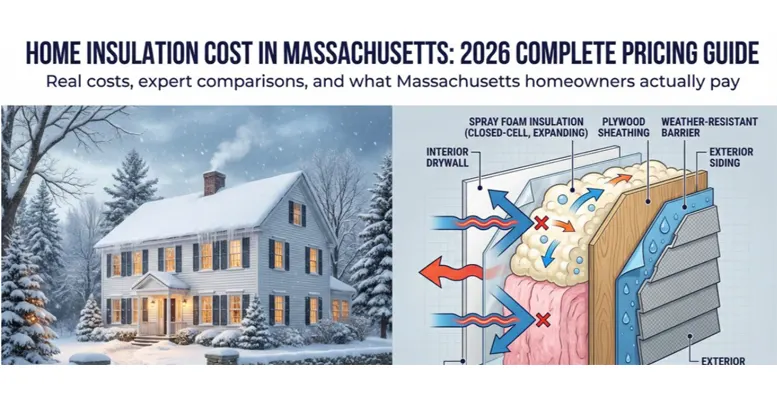
Spray foam costs more upfront, but it delivers better performance in Massachusetts winters. Closed-cell spray foam has an R-value of 6.0 to 7.0 per inch, compared to 2.9 to 3.8 for fiberglass. That means you need less thickness to achieve the same insulation level.
More importantly, spray foam stops air leaks. Air leakage accounts for 25% to 40% of heat loss in most homes, and traditional insulation like fiberglass does nothing to stop it. Spray foam creates an airtight seal, which reduces drafts, prevents ice dams, and lowers heating costs.
Massachusetts homeowners who upgrade to spray foam typically save $500 to $800 per year on energy bills. With an average project cost of $3,000 to $5,000 for a typical attic, the payback period is five to seven years. After that, the savings are pure profit.
How to Get an Accurate Insulation Quote
Most insulation quotes in Massachusetts vary because contractors make different assumptions. Some include removal of old insulation. Others don’t. Some quote R-38 when you actually need R-60. And some lowball the labor cost to win the bid, then add charges later.
To get an accurate quote, ask three questions. First, what R-value are you installing? Make sure it meets or exceeds R-49 for attics in the Boston area. Second, does the quote include removal of old insulation? If your attic already has material that needs to come out, that should be in the price. Third, what’s included in the labor cost? Clarify whether the quote covers air sealing, vapor barriers, and any necessary repairs.
A detailed quote protects you from surprises and ensures you’re comparing apples to apples when you evaluate multiple contractors.
Final Thoughts
Massachusetts insulation costs are higher than the national average, but they reflect the reality of our climate. Extreme winters demand higher R-values, better air sealing, and more skilled installation. Cutting corners to save money upfront usually costs more in the long run through higher energy bills and premature replacement.
If you’re ready to upgrade your insulation, start with an honest assessment of your current R-value and a clear understanding of what each material offers. Spray foam delivers the best performance for Massachusetts winters, but cellulose and fiberglass can work if installed correctly and paired with proper air sealing.
Get multiple quotes, ask detailed questions, and choose a contractor who understands the specific challenges of insulating homes in New England.
Ready to get started? Request a free insulation estimate from Thermal Core Insulation at thermalcoreinsulation.com/contact. We provide honest pricing and expert installation for Massachusetts homeowners.